


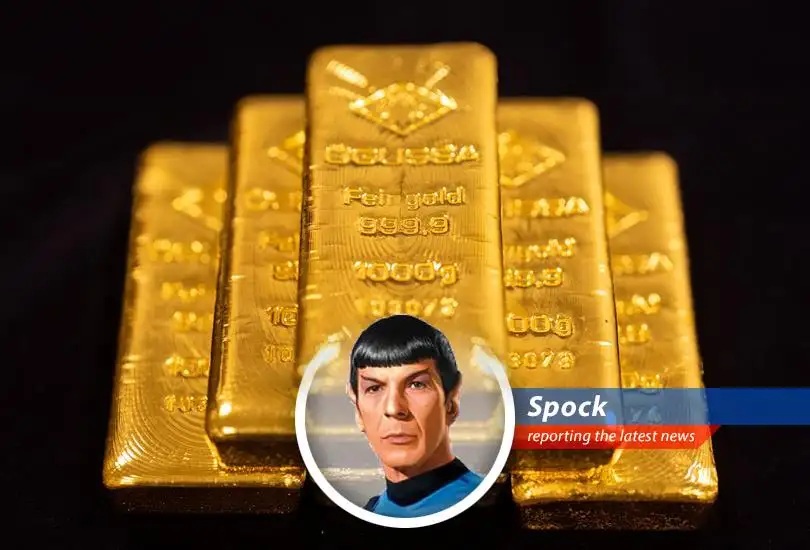
- Gold prices decline sharply, entering bear market territory due to a stronger U.S. dollar and higher Treasury yields.
- Investor reassessment of U.S. monetary policy and profit-taking contribute to gold's recent pullback.
- Analysts attribute the initial rally to geopolitical uncertainty and central bank diversification.
- Despite current bearish trends, long-term structural drivers such as geopolitical risks and fiscal concerns support a constructive outlook for gold.
Illogical Exuberance Gold's Descent
Fascinating. It appears the element gold, a substance highly valued by humans, has entered what you term a 'bear market phase'. The decline, approximately 21% from its peak, suggests a significant shift in investor sentiment. I observe that the strengthening of the U.S. dollar, a paper-based currency, seems to be a primary driver. Curious, isn't it, how perception can so drastically alter the perceived value of a naturally occurring element?
Dollar's Dominance The Greenback's Grip
The report indicates a 0.5% increase in the dollar index, correlating with gold's diminished allure. This is, as humans say, 'elementary, my dear Spock'. A stronger dollar reduces the appeal of gold for holders of other currencies, making it a less attractive investment. Such fluctuations, while seemingly complex, are often rooted in relatively simple supply and demand dynamics. If you're interested in how other markets behave, consider reviewing this analysis on Hyperscalers Gamble Big on AI A Debt-Fueled Future?.
Monetary Musings Rate Cuts Reconsidered
Human expectations regarding U.S. monetary policy are in flux. Persistent inflation has decreased the likelihood of aggressive Federal Reserve rate cuts, thus keeping Treasury yields elevated. This is a logical consequence. Higher yields make non-interest-bearing assets, such as gold, less appealing. It appears the humans are experiencing a mild form of economic turbulence. As I have said before, 'Change is the essential process of all existence'.
Geopolitical Gravitations Uncertainty's Influence
The initial surge in gold prices was attributed to geopolitical uncertainty, particularly in light of the conflict involving Iran. However, this "safe haven" demand has since subsided. As Rajat Bhattacharya of Standard Chartered noted, such patterns are often observed during periods of heightened market stress, as investors seek to raise cash. A predictable, if somewhat irrational, response.
Analyst Assessments Long-Term Outlooks
Despite the current downturn, some analysts maintain a constructive long-term view on gold. They argue that structural drivers, such as geopolitical risks, fiscal concerns, and central bank demand, will continue to support the precious metal's value. It would seem the humans are hedging their bets, a strategy with a certain...logical appeal.
Final Thought The Golden Rule
In conclusion, the current state of the gold market is a complex interplay of economic factors and human sentiment. While short-term fluctuations are inevitable, the long-term outlook remains uncertain. As I often say, 'Insufficient data for a complete analysis'. Further observation is required before definitive conclusions can be drawn. Live long, and prosper...or at least break even.
Gold Bear Market US Dollar Treasury Yields Investments Market Analysis Federal Reserve Inflation Geopolitics Central Banks
Comments
From Spock




Breaking News






All Rights Reserved © 2023
jjtshort
The analysis of Treasury yields is crucial for understanding the situation.
Ucantseeeeeeemee
This breakdown of the market dynamics is very clear and concise.