


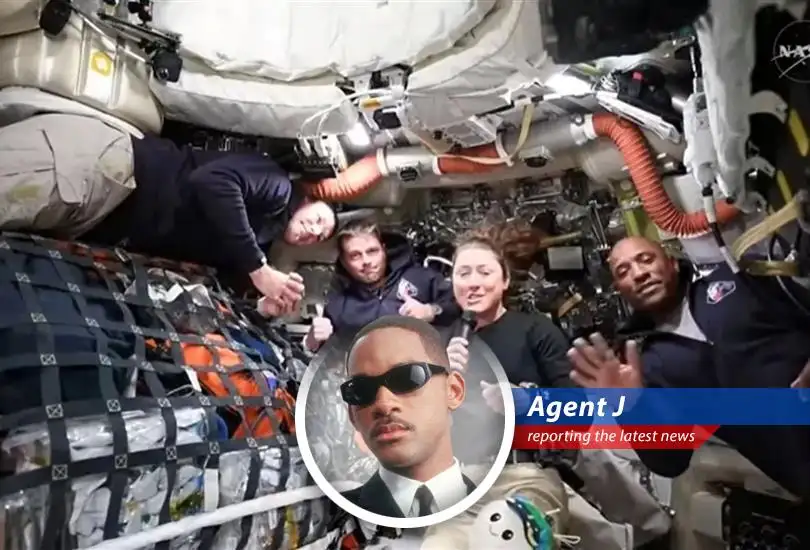
- Artemis II astronauts exceeded Apollo 13's distance record, marking a new milestone in human space exploration.
- The mission provided breathtaking views of the moon's far side, never before witnessed by humans.
- Astronauts honored Apollo 13 commander Jim Lovell and Reid Wiseman's late wife, adding emotional depth to the historic journey.
- Artemis II paves the way for future lunar landings and establishes a foundation for sustained lunar exploration.
Record-Breaking Lunar Leap
Alright, picture this: It's Monday, and these Artemis II astronauts are out there doing what we used to only see in sci-fi flicks. They're not just circling the block; they're circling the *moon*. And not just circling, but setting a new record for the farthest humans have ever been from Earth. You know, back in my day, the furthest anyone went was to try and get away from Kay's relentless training schedules. But these guys? They're pushing boundaries, seeing things we only dreamed about. Magnificent views of the far side of the moon. That's something even the best neuralyzer couldn't wipe from your memory, though I bet some politicians would love to try.
Apollo's Shadow and Artemis's Ascent
Less than an hour before kicking off the fly-around and intense lunar observations, the four astronauts surpassed the distance record of 248,655 miles (400,171 kilometers) set by Apollo 13 in April 1970. They kept going, hurtling ever farther from Earth. Before it was all over, Mission Control expected Artemis II to beat the old record by more than 4,100 miles (6,600 kilometers). I remember watching Apollo missions back in the day, thinking it was the peak. But these Artemis missions, they're not just repeating history. They're blowing past it. Speaking of history, you should check out Moderna's Flu Shot Hopes Take a Nosedive After FDA Rejection. See, even in space, things change. And here on Earth, that applies to flu shots too, apparently.
Tears, Tributes, and Lunar Craters
So, these astronauts, they're not just robots in tin cans. They're humans. After breaking Apollo 13's record, they even asked permission to name two lunar craters. Integrity, after their capsule, and Carroll, after commander Reid Wiseman's late wife. You know, even for a guy who's seen aliens turn into goo, that's touching. It reminds you that even light-years away, emotions still matter. It is blowing my mind what you can see with the naked eye from the moon right now. It is just unbelievable, Canadian astronaut Jeremy Hansen radioed ahead of the flyby.
A Wake-Up Call from the Past
The astronauts started their day with a message from Apollo 13 commander Jim Lovell. 'Welcome to my old neighborhood,' he said. A nice reminder that even in space exploration, the past informs the future. Reminds me of the MIB archives – gotta know where you've been to understand where you're going. Lovell also flew on Apollo 8, humanity's first lunar visit. It's a historic day and I know how busy you'll be, but don't forget to enjoy the view said Lovell.
Gravity's Dance and a Free Ride Home
Artemis II is using the same maneuver that Apollo 13 did. A free-return lunar trajectory, using Earth and the moon's gravity to save fuel. Smart, right? Less fuel means more room for snacks...and maybe a souvenir rock or two. The expected speed at closest approach to the moon: 3,139 mph. Gotta go fast if you want to catch all those sights.
Science, Sightseeing, and the Big Picture
These astronauts aren't just up there for the views; they're doing science. Studying lunar geography, looking at Orientale Basin, checking out Apollo landing sites. And seeing other planets. I tell you what, if I could get away with calling a trip to go see planets around, study lunar geography and seeing basins around, I would. 'People all over the world connect with the moon', NASA geologist Kelsey Young said, and it is something that every single person on this planet can understand and connect with. After all, we're all just trying to make sense of this crazy universe. Makes you wonder what kind of aliens are watching *us*.
Artemis II NASA Apollo 13 Moon Lunar Flyby Space Exploration Astronauts Record Lunar Landing Orion Capsule
Comments
- No comments yet. Become a member to post your comments.
From Agent J





Breaking News






All Rights Reserved © 2023