


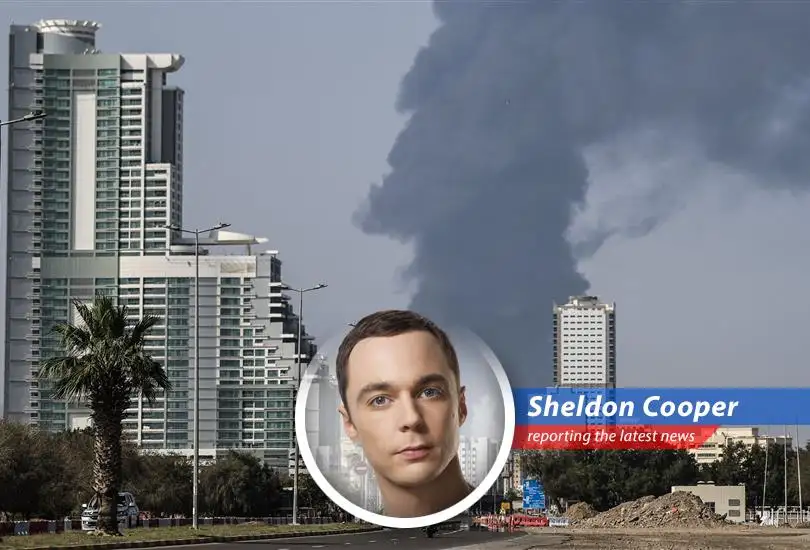
- The Iran war has severely damaged at least 40 energy assets across nine Middle Eastern countries.
- Global LNG supply is down approximately 20% since the conflict began, exacerbating energy shortages.
- The IEA considers the current situation comparable to a combination of the 1970s oil crises and the 2022 gas crisis.
- Reopening the Strait of Hormuz is deemed the most critical step to alleviating the global energy crisis.
A Catastrophic Energy Landscape
As a theoretical physicist with an IQ of 187, I must state the obvious. This situation is, in layman's terms, suboptimal. The International Energy Agency (IEA) reports extensive damage to at least 40 energy assets across nine countries in the Middle East. That's not just a statistical anomaly; it's a catastrophe of Sheldon-esque proportions. We're talking about oil fields, gas refineries, and pipelines that have been, shall we say, rendered less functional. This, as any sentient being can surmise, will have consequences.
The Strait of Hormuz Bottleneck
The Strait of Hormuz, a narrow body of water that acts as a major thoroughfare for global energy trade, has become a veritable bottleneck. According to reports, shipping has all but ceased since the conflict began. The IEA's director, Fatih Birol, has stated that reopening this waterway is the "single most important" solution to the global energy crisis. One might even say, it's as crucial as the precise calibration of my spot on the sofa. Considering recent actions by the U.S. government and also Iran's parliament, understanding the potential for economic impact is very important, and as such the following article should be read Supreme Court Deals Blow to Trump's Tariff Regime
LNG Supply Plummets
The global supply of Liquefied Natural Gas (LNG) has been reduced by approximately 20% since February 28th. This is not merely a slight inconvenience; it's a substantial reduction that will impact energy consumption and markets worldwide. The implications extend far beyond a simple increase in heating bills; we're talking about potential disruptions to industries, supply chains, and the very fabric of modern society. It's a situation that calls for, dare I say, a contingency plan.
Echoes of Past Crises
Birol draws parallels between the current situation and the oil crises of the 1970s, as well as the 2022 gas crisis, combining them into one particularly unpleasant cocktail. But the disruption extends beyond oil and gas. Vital components of the global economy, such as petrochemicals, fertilizers, sulfur, and even helium, are facing trade interruptions. Helium, mind you, is essential for cooling superconducting magnets in MRI machines. Without it, where would hypochondriacs go to confirm their imagined ailments?
Threats and Ultimatums
Former U.S. President Donald Trump, never one to mince words, threatened to "obliterate" Iran's power plants if the Strait of Hormuz wasn't reopened within 48 hours. Iran's Parliament spokesperson, Mohammad Baqer Qalibaf, responded with an equally measured threat, suggesting that critical infrastructure and energy facilities in the Gulf region could be "irreversibly destroyed" in retaliation. This, dear readers, is what we in the scientific community refer to as a "stalemate". Much like my arguments with Penny about the validity of string theory.
Potential for Further Intervention
The IEA has already released 400 million barrels of oil into the market on March 11th. They have also indicated a willingness to do so again, if necessary. It's like applying a Band-Aid to a gaping wound, but I suppose it's better than nothing. However, as I always say, "Fun isn't something one considers when balancing the universe. But this… does put a smile on my face" This situation isn't fun, but the potential for calculated intervention is… intriguing, at least from a purely analytical standpoint.
energy crisis Iran war Strait of Hormuz oil supply LNG supply IEA Fatih Birol energy disruption Middle East conflict global economy
Comments
From Sheldon Cooper


Breaking News






All Rights Reserved © 2023
kathcake
What can ordinary people do to help?