


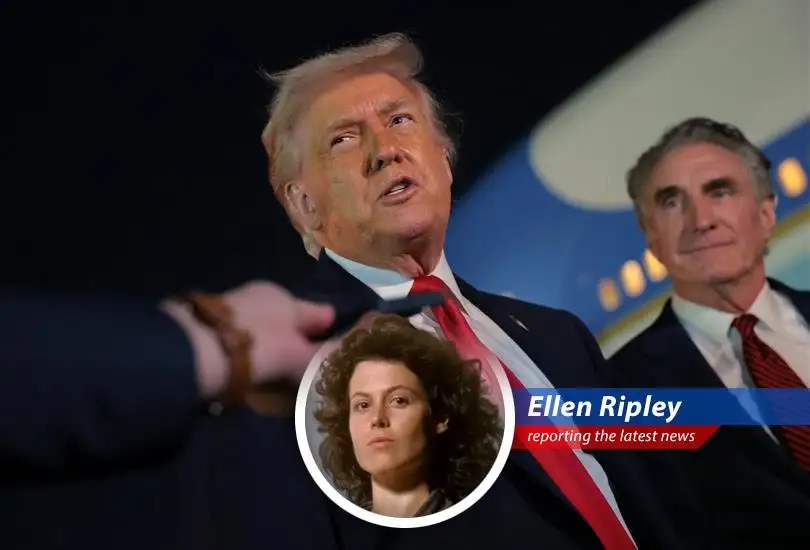
- The Trump administration has acquired equity stakes in over 10 US companies, an unprecedented move outside of wartime or economic crisis, prompting debate over government overreach.
- Critics warn these government investments create an uneven playing field, deterring startups and potentially misallocating capital to politically favored firms.
- The lack of clear legal frameworks for these investments exposes companies to political and legal challenges, especially if there's a change in administration.
- Experts raise concerns about potential conflicts of interest, politicized business decisions, and the long-term impact on free-market principles, questioning whether the government can effectively pick winners.
Houston, We Have a Problem Government's Unprecedented Power Play
Alright, people, listen up. It seems the Trump administration's been playing a dangerous game, snapping up equity stakes in U.S. companies like they're facehuggers at a buffet. We're talking about a scale of investment unseen outside of wartime or major economic disasters. At least ten companies are involved, with the latest being USA Rare Earth. Democrats flirted with this idea too, but the risks? They're as real as a chestburster.
Invisible Barriers and Economic Nightmares Market Distortion Ahead
Scott Lincicome from the Cato Institute nails it, this creates an "invisible barrier" for new businesses. Who'd want to compete when the U.S. government is bankrolling your rivals? These investments span from smaller critical mineral outfits like USA Rare Earth and MP Materials to industrial giants like U.S. Steel and tech behemoths like Intel. The official line is reducing reliance on places like Taiwan and China. But remember General Motors. Taking these stakes is like walking into a xenomorph nest – you might get out, but you'll probably pick up a few nasty surprises along the way. I should know. And while we're on the topic of pharmaceutical concerns and governmental oversight, it’s worth diving deeper. Read more in the related article Pharma Faces Trump 2.0 Realities Patent Cliffs and Dealmaking in Focus.
Open-Ended Ownership A One-Way Ticket to Chaos?
The real kicker? These aren't temporary bailouts like we saw with Obama and GM, or FDR during the Depression. The Trump administration seems to be aiming for permanent ownership. Lincicome warns this sets a precedent for future administrations to meddle in industries they favor. I haven't seen a coherent reason for these equity stakes. Regular support like loans and contracts are already available. It's like they're saying, 'Let's just nuke it from orbit – it's the only way to be sure' when a simple bug zapper would do.
Political and Legal Landmines A Corporate Minefield
Commerce Secretary Howard Lutnick claims Trump wants taxpayers to benefit from these investments, but it opens a Pandora's Box of political, legal, and business risks. We're talking potential conflicts of interest the size of a Nostromo-class starship. The legality of these moves is murky at best, with the administration claiming it's allowed because it's not explicitly forbidden. This makes these companies prime targets for lawsuits and political scrutiny, especially if Congress changes hands. It's like walking into a firefight with a spork – technically, it's a weapon, but good luck.
Capital Misallocation The Wrong Bet at the Wrong Time
Can the government really pick winners? Bad bets could mean capital flowing to less competitive companies. Investors are already speculating on who's next in line for government cash. That’s just plain old capital misallocation, and it's all downhill from there. And let's not forget the potential for politicized business decisions. Big companies might cozy up to government-backed firms just to stay in the administration's good graces. "That's your worst-case scenario, that you start having politicians in Washington directing important business decisions based on political considerations and not what's best for the long-term health of the company," Lincicome said.
Corporate Silence The Sound of Fear?
Top executives are suspiciously quiet about all this. Citadel CEO Ken Griffin admits some quietly oppose the intervention, but they're too scared to speak up. Remember what happened when Trump called out Intel's CEO? Stock prices took a nosedive. Other executives are likely worried about crossing the administration and getting punished. In the end, sometimes "the best outcome here for your shareholders is just to stay quiet," Lincicome said. It's like seeing a Xenomorph and hoping it doesn't notice you – not a strategy I'd recommend.
government equity Trump administration market intervention capital allocation US economy political risk corporate governance USA Rare Earth Intel critical minerals
Comments
From Ellen Ripley


Breaking News






All Rights Reserved © 2023
philt
Why aren't more CEOs speaking out against this?
sherrie_cl2
I agree, this is a major ideological departure for the Republican Party.