


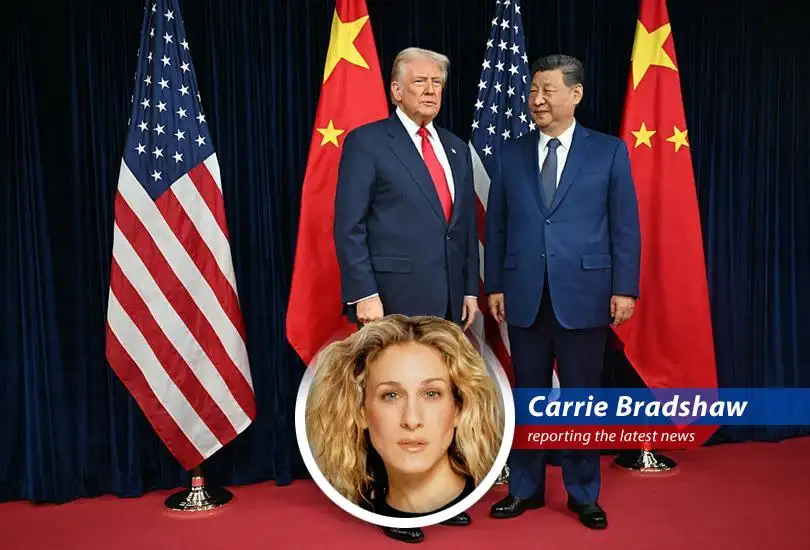
- The US initiates sweeping trade investigations targeting China under Section 301 of the Trade Act.
- These probes aim to address unfair trade practices like overcapacity and forced labor in Chinese manufacturing.
- The move complicates diplomatic efforts ahead of a high-stakes summit in Beijing.
- Analysts are tempering expectations for the summit, focusing on maintaining stability in bilateral relations.
Is This Deja Vu All Over Again
Darling, sometimes I feel like I'm stuck in a revolving door of geopolitical drama. The U.S. is at it again, launching trade investigations against China, just as a high-stakes summit looms. It's like watching a bad rom-com where the couple can't decide if they're in love or hate. Remember when Trump slapped tariffs on everything coming out of China? Well, here we go again. The probes, under Section 301, are aimed at those 'unfair' trade practices—overcapacity, forced labor, the usual suspects. It's like accusing your boyfriend of always leaving the toilet seat up, even though you do it too sometimes.
The Art of the Deal Or Is It
According to Dan Wang from Eurasia Group, it's all about leveraging power. "Maximizing leverage before major bilateral meetings seems to be a standard move now," she said. Sounds like someone's been reading "The Art of War" instead of "He's Just Not That Into You." And speaking of leverage, the U.S. Supreme Court recently clipped Trump's tariff wings, giving China a bit of an edge. It's like Charlotte getting a divorce settlement—unexpected, but definitely changing the game. But the Justice Department is often under fire on things like this, and is this really different? You be the judge, read Justice Department Under Fire Over Epstein File Handling A Familiar Tune.
Export Extravaganza China's Trade Surplus
Meanwhile, China's export machine is humming along, full throttle. Their exports surged by almost 22% in the first two months of the year, boosting their trade surplus to a record high. It's like seeing your ex driving a Ferrari while you're still taking the subway. Makes you wonder if you missed something, doesn't it? I guess those knock-off handbags are really flying off the shelves.
Summit or Standoff Expectations are Low
Deborah Elms from the Hinrich Foundation says no one knows what's even on the table for discussion. The summit is coming up fast, and the gap between the two sides' agendas is widening. It’s like planning a wedding with someone who wants a beach ceremony while you're dreaming of a gothic cathedral. Someone's going to be disappointed. Add to that, tensions in the Middle East are complicating things further. It's as if the universe is conspiring to make this summit a complete disaster. Perhaps a few cosmos and a new pair of Manolos will make it all seem a little less dramatic. Or maybe not.
Oil and Troubled Waters
As if trade wasn't complicated enough, U.S. actions against Iran are putting China's energy supplies at risk. Alfredo Montufar-Helu from Ankura Consulting in Beijing says a volatile external environment is the last thing Beijing needs right now. It's like trying to bake a soufflé during an earthquake. The Strait of Hormuz, a critical waterway for oil, is in danger, and China's envoy is trying to mediate. All of this just before a summit designed to foster cooperation. Is it too much to ask for a little peace and quiet, or at least a decent bottle of champagne?
A Delicate Dance of Diplomacy
So, what can we expect from this high-stakes summit? Apparently, "maintaining the stability achieved in Busan is, in itself, an excellent result." That's the expert's view anyway. Sounds like settling for a beige cashmere sweater when you were hoping for a Dior gown. According to analysts, Washington will push for agricultural purchases and assurances on rare earth exports, while China will seek clarity on U.S. technology restrictions. Deliverables will likely be limited to commercial purchases. It's all about maintaining stability, even if it means everyone leaves feeling a little underwhelmed. And, the possibility of American CEOs joining Trump on his trip to Beijing is fading. Few CEOs have been invited, and even fewer have agreed to come given how little time remains. It’s as if the red carpet has been replaced with a doormat. In the end, maybe that’s all we can expect in these complicated times – a little bit of damage control and a whole lot of waiting to see what happens next. After all, as I always say, "Maybe our mistakes are what make our fate."
US-China trade trade war Section 301 China trade practices US trade policy Trump tariffs Beijing summit global trade trade investigations trade relations
Comments
- No comments yet. Become a member to post your comments.
From Carrie Bradshaw


Breaking News






All Rights Reserved © 2023