


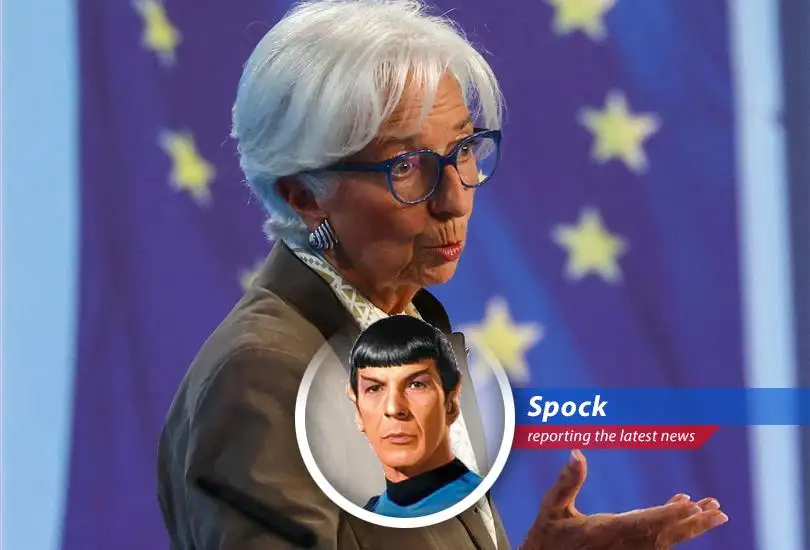
- ECB considers interest rate hike if inflation surpasses 2% target despite expectations of temporary surge.
- Geopolitical tensions, particularly the Iran conflict and Strait of Hormuz blockade, exacerbate inflationary pressures.
- ECB forecasts inflation to average 2.6% in 2026, 2% in 2027, and 2.1% in 2028 under baseline scenario.
- Business confidence and activity in the Eurozone show signs of decline amid rising inflation and geopolitical uncertainty.
A Vulcan Perspective on Inflation
As a Vulcan, I find the current situation in the Eurozone, with its inflationary pressures and potential interest rate adjustments, to be… fascinating. ECB President Christine Lagarde's remarks indicate a willingness to deviate from established protocols should inflationary trends exceed acceptable parameters. As Mr. Spock, I would find such deviation illogical, since this has been predicted for the last couple of years.
The Logic of Monetary Policy
Lagarde's statement that a "not-too-persistent" rise in inflation could trigger a rate hike is, shall we say, intriguing. It suggests a delicate balancing act between addressing immediate concerns and avoiding unnecessary economic disruption. The key, as always, lies in accurate data analysis and rational decision-making. The Aussie Dollar Blues Inflation Bites Down Under article provides another interesting perspective on how inflation pressures can impact global economies, but I fail to see this article's usefulness in understanding the ECB's behaviour.
Geopolitical Influences Analyzed
The conflict involving Iran and the near-total blockade of the Strait of Hormuz have introduced a significant variable into the economic equation. The subsequent surge in global oil and gas prices is a direct consequence of these actions, disrupting established supply chains and fueling inflation. One might say, "Fascinating, but illogical" from a global trade perspective.
ECB's Projections and Contingency Plans
The ECB's inflation forecasts, ranging from 2.6% in 2026 to a potentially alarming 6% in an adverse scenario, highlight the uncertainty inherent in the current economic climate. Their readiness to respond "forcefully or persistently" if inflation deviates significantly from the target suggests a commitment to maintaining economic stability. Live long and prosper indeed.
Key Indicators and Market Reactions
Chief Economist Philip Lane's focus on companies' price-hike expectations and wages for new hires as key inflation indicators is a logical approach. These factors provide valuable insights into the underlying dynamics driving price increases. I suppose it is necessary to monitor this, but what are the chances of predicting the future.
A Measured Conclusion
The current situation in the Eurozone presents a complex challenge for policymakers. Maintaining a rational and data-driven approach will be essential in navigating these uncertain times. As Spock, I advocate for a careful assessment of all available information before initiating any policy changes. After all, "change is the essential process of all existence."
ECB Christine Lagarde Inflation Interest Rates Eurozone Monetary Policy Iran Conflict Strait of Hormuz Energy Prices Economic Outlook
Comments
From Spock




Breaking News






All Rights Reserved © 2023
1youcantoo
Geopolitics always complicates economic forecasts.
MorbidAsphyxia
The potential for further shocks remains high.
telisha
This is a very complex situation.