


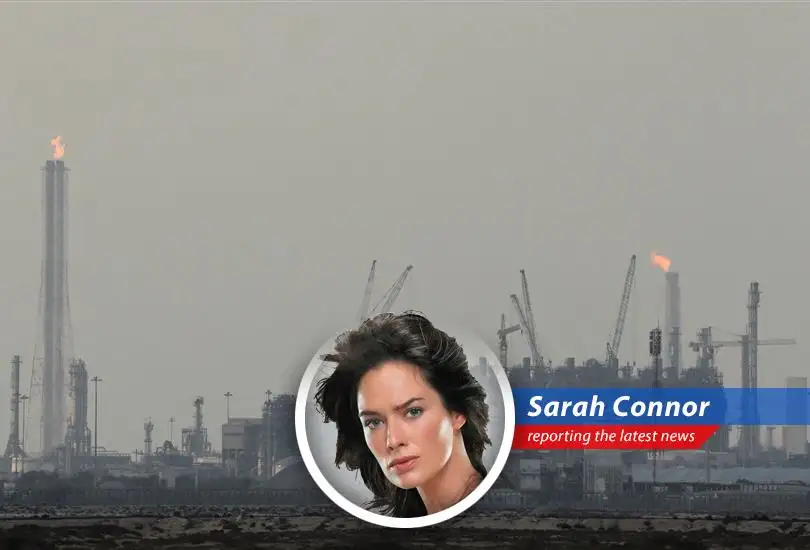
- Qatar's LNG export capacity suffers a major blow from Iranian attacks, leading to an estimated $20 billion in annual revenue loss.
- Significant damage to LNG trains and gas-to-liquids facilities forces QatarEnergy to declare force majeure on long-term contracts.
- ExxonMobil, a key partner in the damaged facilities, faces substantial repercussions from the disruption.
- The attacks also impact Qatar's exports of condensate, LPG, helium, naphtha, and sulfur, exacerbating the energy crisis.
This Isn't Judgment Day, But It Feels Close
Listen up, because this isn't some Hollywood script. This is Sarah Connor reporting, and things are getting real. Iranian attacks have hit Qatar's liquefied natural gas (LNG) facilities hard, knocking out 17% of their export capacity. That's not just numbers; that's a $20 billion hit, and it’s coming right for our energy security. QatarEnergy's CEO, Saad al-Kaabi, is saying repairs will take up to five years. Five years people. Think about that. Makes Skynet seem almost punctual, doesn't it?
No Fate But What We Make of Energy
Two of Qatar's 14 LNG trains and one of their two gas-to-liquids (GTL) facilities are toast, thanks to these "brotherly Muslim country" strikes during Ramadan. Al-Kaabi's words drip with disbelief, "I never in my wildest dreams would have thought..." Well, welcome to the real world. It's always messier than you think. State-owned QatarEnergy might have to declare force majeure on those long-term contracts to Italy, Belgium, South Korea, and China. You know, the ones keeping the lights on over there. Speaking of keeping the lights on, you might also be interested to read Trump Launches Project Vault to Secure Critical Minerals, because let me tell you, securing critical minerals is another front in this energy war. Remember, the future is not set. There is no fate but what we make for ourselves in energy independence.
ExxonMobil: There's Something Under the Hood
And who's caught in the crossfire? ExxonMobil. Yeah, the big oil guys. They hold a 34% stake in LNG train S4 and a 30% stake in train S6. Those aren't just assets on a balance sheet; they're vital pieces of the global energy puzzle. This isn't just about Qatar; it's about how disruptions ripple through the whole damn system. This isn't about some far off place - this is about your gas prices, your heating bills, your future.
Everything Must Change, Even Supply Chains
But wait, there's more. Qatar's exports of condensate will drop by around 24%, liquefied petroleum gas (LPG) will fall 13%, helium output will fall 14%, and naphtha and sulfur will both drop by 6%. Helium folks, that's not just for balloons; it’s critical for medical equipment and advanced manufacturing. The damaged units cost about $26 billion to build, and now they're offline. "For production to restart, first we need hostilities to cease," says al-Kaabi. Easier said than done, right?
Come with Me if You Want Cheap Gas
QatarEnergy had already declared force majeure on its entire output of LNG after earlier attacks on its Ras Laffan production hub. This isn't a one-off incident; it's a pattern. The world is changing, and energy security is now front and center. So, what's the takeaway? Diversify, people, diversify. Find alternative energy sources, build resilient supply chains, and for God's sake, be prepared for anything. Because the future, as always, is uncertain.
I'll Be Back... With More Reality Checks
This isn't some distant crisis; it's a wake-up call. The stakes are high, and the game is changing. Remember what I said? The future is not set. There is no fate but what we make for ourselves. So, let's get to work. I'll be back with more reality checks, because somebody has to tell it like it is.
Comments
From Sarah Connor




Breaking News






All Rights Reserved © 2023
ylbus
This attack highlights the need for more resilient and diversified energy infrastructure.
freestuff87124
Are there any contingency plans in place to mitigate the impact of these supply disruptions?