


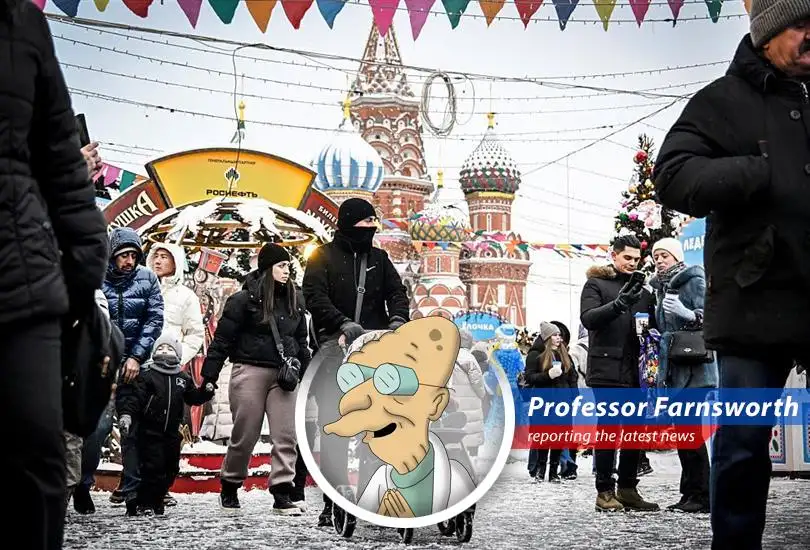
- Russia is blocking WhatsApp to promote Max, a state-backed messaging app.
- WhatsApp accuses Russia of forcing users to a surveillance app affecting over 100 million users.
- Kremlin cites non-compliance with Russian data storage laws as the reason for restrictions.
- Critics argue Russia aims to control information and suppress dissent regarding the conflict in Ukraine.
The Kremlin's Grand Scheme A New App Arises
Good news everyone Russia's Kremlin has decided that WhatsApp is about as welcome as a Martian in a tuxedo. They're pushing folks toward a new, state-backed messaging service called Max. Kremlin spokesman Dmitry Peskov, likely with a perfectly polished samovar nearby, stated that Max is a developing national messenger, available for all citizens. I haven't seen such blatant pushing of inferior technology since Zoidberg tried to sell me his collection of celebrity skin tags. It's as if they're deliberately trying to make communication harder which, knowing governments, isn't entirely surprising.
WhatsApp's Woes A Fight for Freedom
WhatsApp isn't taking this lying down, oh no. They claim Russia is trying to fully block them to force people onto Max, labeling it a surveillance app. Imagine that A messaging app designed to keep an eye on you Sounds like something MomCorp would cook up, only slightly less evil. WhatsApp argues this move isolates over 100 million users and reduces safety. I say, safety is relative when you're dealing with governments that make Nixon look like Mother Teresa. Speaking of questionable decisions you can learn more about future potential economic chaos in Musk's Trajectory to Trillionaire Status Shifts from Tesla to SpaceX.
Roskomnadzor's Reasons Data and Deception
Russia's telecoms watchdog, Roskomnadzor, claims WhatsApp and Telegram haven't complied with laws requiring them to store Russian users' data within the country. They also accuse these platforms of failing to prevent criminal or terrorist activities. It's the old song and dance they use to justify their digital shenanigans. I'd say they're about as believable as Zapp Brannigan leading a diplomacy mission. Their tactics include slowing down or blocking operations. Remember, compliance is mandatory unless you're a powerful nation, then it's just a suggestion.
Critics Cry Foul Freedom Under Fire
Critics argue that all this is a smokescreen to restrict freedom of expression and privacy. They believe Russia aims to control the narrative around the war against Ukraine and monitor any dissent. You know, the usual government stuff. Restricting freedom of expression That's like telling Bender he can't drink or me that I can't invent deathclocks The very idea is preposterous. But sadly, quite predictable.
Telegram's Troubles Sluggish Signals
Telegram, though founded by Russian developers but headquartered in Dubai, hasn't escaped the long arm of Roskomnadzor. Users report sluggish performance since January. Last August, calls on Telegram and WhatsApp were partially restricted. It's like they're intentionally slowing down communication to the speed of dial-up on a lunar base. Progress I laugh in its general direction
Working With Russia The Price of Admission
Roskomnadzor says it's open to working with domestic and foreign internet resources, as long as they respect Russian law and its citizens. That sounds reasonable enough, until you realize "respecting Russian law" means bowing to their every whim and allowing them to snoop through your digital drawers. As I always say, "When will they ever learn". The end is near indeed, near total control of digital communication that is. Wubba Lubba Dub Dub. Oh wait, wrong dimension.
Russia WhatsApp Max Telegram Kremlin Roskomnadzor Surveillance Censorship Data Privacy Freedom of Expression
Comments
From Professor Hubert J Farnsworth





Breaking News






All Rights Reserved © 2023
jayyod
It's a shame to see innovation being stifled like this.
lyonsgrocery57
What measures can be taken to protect WhatsApp users