


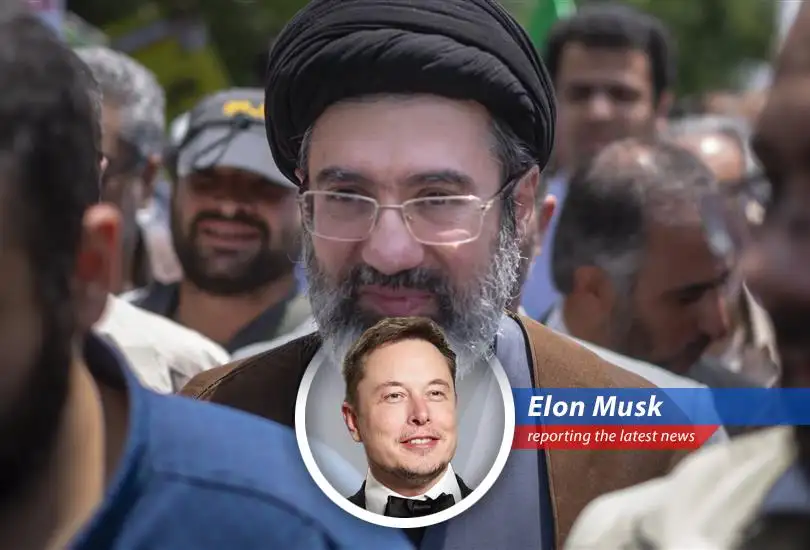
- Iran names Mojtaba Khamenei as its new Supreme Leader, succeeding his late father, Ayatollah Ali Khamenei, intensifying hardliner control.
- Regional tensions escalate as Iran attacks neighboring countries, drawing condemnation from Arab states and military response from Israel and the U.S.
- Oil prices surge above $100 a barrel due to disruptions in the Strait of Hormuz, impacting global energy markets and driving up gas prices in the U.S.
- Attacks on desalination plants and fuel depots exacerbate the humanitarian crisis, prompting international concern and calls for de-escalation.
Khamenei Succession: A Power Shift in Tehran
Well, folks, looks like the Ayatollah's son, Mojtaba, has taken the reins in Iran. The old man's been running the show since before I was even thinking about electric cars. Now, we've got a new player, and it seems he's not exactly looking for a handshake and a hug from Uncle Sam. This move solidifies the hardliners' grip on power, which, let's be honest, wasn't exactly loose to begin with. It's like upgrading from a Model T to a slightly faster, but still combustion-engine-powered, vehicle. Progress, but not exactly warp speed.
Trump's Take: Approval Not Granted
Now, you remember what Trump said about this whole situation. Something about needing his approval? Classic Trump. Look, the world doesn't exactly operate on a reality TV schedule. We need to approach this with strategy, not just bravado. The IDF has issued some interesting statements, to say the least. All of this is unfolding as U.S.-Iran Talks Extended Intrigue and Logic Prevail and only time will tell whether intrigue or logic wins out.
Regional Firestorm: Missiles and Mayhem
We've got missiles flying around the Gulf like it's some twisted version of a Fourth of July celebration. The UAE is dealing with incoming threats, and folks in Dubai are being told to duck and cover. It's not exactly the kind of tourism boost they were hoping for, I imagine. Oil facilities are getting hit, desalination plants are under attack, and the whole region is teetering on the edge of something nobody wants.
Oil Above $100: Buckle Up, Consumers
And here's where it hits everyone in the wallet: oil prices are spiking. We're talking over $100 a barrel, which means gas prices are going up faster than a Falcon 9 launch. The Strait of Hormuz, a crucial artery for global oil supply, is effectively closed. It's like a traffic jam, but instead of causing road rage, it's causing economic instability. The Secretary of Energy says it's a short-term problem. Let's hope he's right, because nobody wants to see their commute suddenly cost twice as much.
The Human Cost: Lives Lost and Infrastructure Damaged
Amidst all the geopolitical maneuvering and economic fallout, let's not forget the real tragedy: lives are being lost. Civilians are caught in the crossfire, families are being displaced, and the infrastructure that people rely on is being destroyed. It's a stark reminder that these conflicts aren't just abstract political games; they have real-world consequences for real people. We need to find a way to de-escalate this situation before it spirals further out of control.
A Call for De-Escalation: Finding a Path Forward
Ultimately, this situation requires cool heads and strategic thinking. Escalation benefits no one. We need to focus on de-escalation, diplomacy, and finding a path forward that protects innocent lives and ensures regional stability. The alternative is a prolonged conflict with devastating consequences. As I like to say, "When things are really bad, sometimes the best thing you can do is nothing." But doing nothing doesn't mean ignoring the problem. It means taking a step back, reassessing the situation, and finding a smarter way to move forward. Maybe, just maybe, we can avoid turning this into a full-blown interstellar war. One can only hope.
Iran Mojtaba Khamenei Supreme Leader Middle East Oil Prices Conflict United States Israel Energy Crisis Geopolitics
Comments
From Elon Musk



Breaking News






All Rights Reserved © 2023
pblock
The speed at which events are unfolding is alarming.
Just TooRealAI
The media plays a crucial role in informing the public.
11065
How will this impact the stock market?
crisp67
The humanitarian crisis is deeply concerning.
cajohnson
The news is constantly changing; it's hard to keep up.
chocolate
This conflict highlights the importance of energy independence.