

- Middle East sovereign wealth funds are crucial for AI investment, representing a quarter of global commitments.
- Geopolitical instability could divert Middle East funds away from AI and towards domestic rebuilding.
- Overinvestment and speculation in AI mirror the dot-com bubble, raising risks of significant losses.
- Family offices venturing into direct investments face challenges in assessing and managing private companies.
A Looming Funding Drought The Gerudo Desert of AI Investment
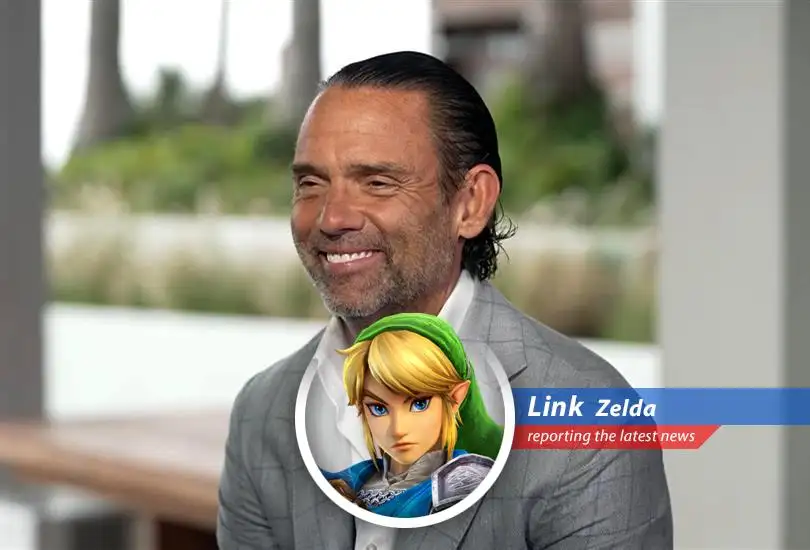
Hylians, listen closely. A shadow looms over the bright future of artificial intelligence, and it’s not just Ganon this time. Tech investor Jack Selby warns that a potential pullback by Middle East sovereign wealth funds could drain hundreds of billions of rupees—I mean, dollars—from the AI boom. These funds, vital as the water in Zora’s Domain, account for roughly a quarter of global AI investments over the next five years. "I think markets have underappreciated how important the Middle East region is for capex spending as it relates to AI and AI infrastructure," Selby said, a statement as profound as the prophecies of the Sheikah.
War and Peace Shifting Sands of Investment
If the Iran war intensifies, countries like the UAE and Saudi Arabia might divert their funds to rebuilding efforts at home, leaving a void in the AI sector. Imagine Hyrule Castle needing repairs after a Calamity Ganon attack but having to choose between fixing the castle or investing in the latest Guardian technology. It's a tough choice. Selby notes this shift could impact data centers and both public and private tech companies. For more insight, explore Kyndryl Plunges While Trump Boosts Media Stocks - What in the World is Going On for a broader view of market volatility.
Titans of Tech At Risk The Deku Tree's Warning
Companies like Oracle, Nvidia, and Cisco, heavily involved in OpenAI's UAE campus, stand to lose if funding dries up. Microsoft's $15 billion investment in the UAE by 2029 could also be at risk. These tech giants, powerful as the Triforce, depend on this capital to fuel their AI ambitions. The sovereign wealth funds of the UAE and Saudi Arabia have become key investors in private AI companies, with OpenAI reportedly seeking $50 billion from the big funds in the region earlier this year. Selby estimates that half of the Middle East's AI funding is dedicated to data centers located in the region, while the other half is allotted to projects and data centers worldwide.
Force Majeure Canceling Contracts Like Dismissing a Bokoblin
Middle East funds and companies have already begun canceling shipping and business contracts by invoking force majeure, a term as ominous as a Blood Moon. The biggest fear is that they will start canceling data centers as well. "Markets don't seem to grasp that this is a very real situation," Selby warns. "It's very volatile. I hope and I pray that it goes back to some semblance of normalcy soon. But it seems to me that markets are underpricing this volatility and the risk."
Echoes of the Dot-Com Bubble A Familiar Tune from the Ocarina of Time
Beyond geopolitical tensions, AI faces a risk of overinvestment and speculation, reminiscent of the dot-com bubble. Investors are bidding up the values of AI and infrastructure companies indiscriminately, much like greedy Keese drawn to a flickering flame. The top hyperscalers are expected to spend over $700 billion this year, potentially leading to wealth destruction far surpassing the dot-com bust. "AI is a revolutionary technology, don't get me wrong," Selby said. "But it can also be an exceptional bubble. There will be extreme winners and there also be some real losers. And those losers will be orders of magnitude larger than any of the losers that we've seen before."
Finding Value in the Outskirts A Journey Beyond Hyrule Field
Selby's strategy is to seek out tech firms beyond the usual hubs of California, New York, and Massachusetts. He believes the best values lie in the other 47 states, where investment opportunities are less expensive. This is like finding hidden treasure in the forgotten corners of Hyrule, far from the bustling marketplaces. "The good news is you get outside of those three states and go to the other 47 states, the deals, the investment opportunities are far, far, far less expensive, and that's what we do."
artificial intelligence AI Middle East sovereign wealth funds data centers investment Jack Selby Thiel Capital venture capital family offices
Comments
- No comments yet. Become a member to post your comments.
From Zelda

Breaking News






All Rights Reserved © 2023