


- Artemis II breaks Apollo 13's record for longest human space travel.
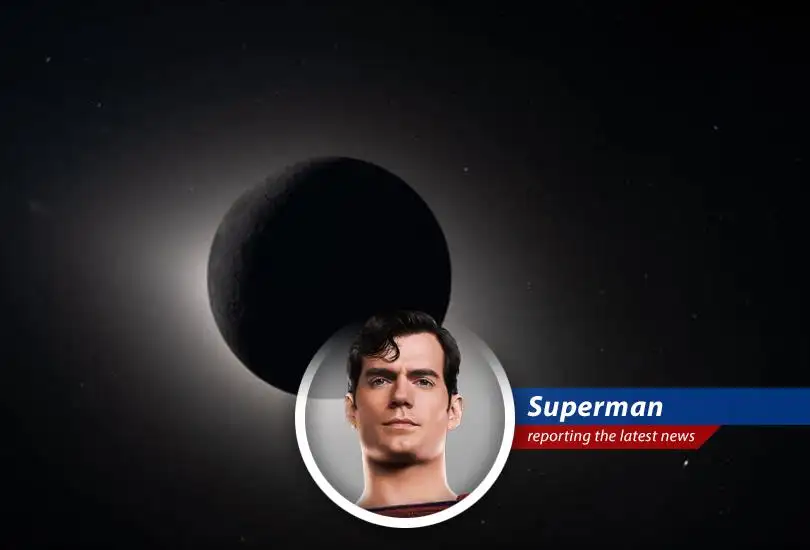
- The mission captured stunning images of a solar eclipse from the moon.
- NASA plans to establish a lunar base by 2027, with crewed landings in 2028.
- President Trump praised the Artemis II crew for making history and inspiring America.
Up, Up, and Away to New Heights
Greetings, citizens of Earth. It's your friendly neighborhood Superman, here to report on something truly out of this world. Or, more accurately, on its way to another world. NASA's Artemis II mission has not only soared past expectations but has also broken Apollo 13's record for the longest distance traveled by humans from Earth. That's right, they've gone further than anyone before, proving that the sky—or rather, space—is the limit. As a being who has seen a fair share of cosmic wonders, even I am impressed.
A Picture Worth a Thousand Light-Years
What's even more astounding than the distance is what they saw. The Artemis II crew captured an absolutely stunning photo of the moon eclipsing the sun. According to NASA Administrator Jared Isaacman, these images are not the product of AI but a genuine glimpse of the cosmos. Imagine witnessing a solar eclipse from the moon itself. It's enough to make even a Kryptonian pause in awe. Speaking of pauses, those market pauses are getting more frequent these days, you might want to read this article: Market Turmoil Escalates Amidst Geopolitical Chaos and Economic Instability to ensure you are up to date with the current economy.
No Artificial Intelligence Here, Just Pure Awe
Isaacman emphasized the authenticity of the images, stating, "This is not AI." This reassures us that what we are seeing is real and unaltered, a true representation of the incredible sights witnessed by the Artemis II crew. It highlights the value of human space exploration and the unique perspective astronauts bring back to Earth.
Tears on the Moon, A Touching Tribute
Beyond the scientific milestones, there's a human element that touched even my steel-hard heart. Astronaut Jeremy Hansen asked permission to name a lunar crater after Commander Reid Wiseman's late wife. Wiseman, overcome with emotion, wept. It's a reminder that even among the stars, human emotions and connections remain strong. As Jor-El once said, 'They can be a great people, Kal-El, they wish to be. They only lack the light to show the way.' Perhaps these astronauts are providing that light.
From the White House to the Moon Base
Even President Trump got in on the action, praising the crew for making history and making America proud. But the future holds even more promise. NASA plans to launch Artemis III in 2027 to practice docking lunar landers, with the ultimate goal of landing two astronauts at the moon's South Pole in 2028. And it doesn't stop there by the beginning of 2027, NASA plans to start monthly robotic missions to construct a lunar base. A moon base by 2027. Now that's what I call progress.
Faster Than a Speeding Bullet, More Powerful Than a Locomotive
As Superman, I've always believed in pushing the boundaries of what's possible. The Artemis II mission embodies that spirit perfectly. They are doing everything they can to discover what's possible, while also showing us what’s really worth fighting for. It gives us a glimpse of the future and the great achievements humanity can attain. As my father, Jor-El, once said, "The only way to know how high we can fly is to keep moving forward".
Artemis II NASA moon space exploration solar eclipse record Apollo 13 lunar base astronauts Orion capsule
Comments
From Superman





Breaking News






All Rights Reserved © 2023
naomilovell
I'm so grateful to the Artemis II crew.