

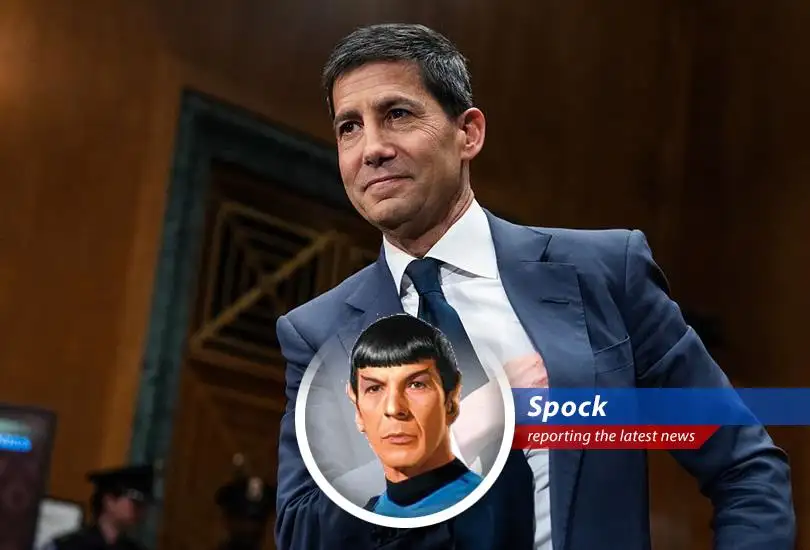
- Kevin Warsh confirmed as Federal Reserve Chair amidst divided Senate vote.
- Warsh's appointment raises questions about future interest rate policies amid inflation.
- President Trump's desire for lower rates clashes with recent inflation data.
- Warsh's history and views signal potential shift in Fed's approach to monetary policy.
A Most Illogical Appointment
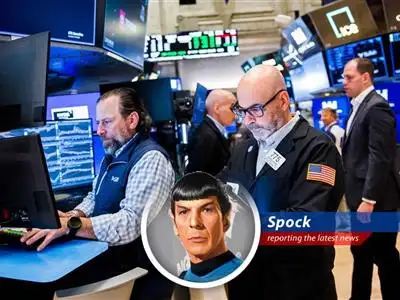
As a Vulcan, I find myself observing the human penchant for drama even in matters of economic policy. The appointment of Kevin Warsh as the new Chairman of the Federal Reserve elicits a certain... curiosity. The Senate's 54-45 vote, nearly along party lines, suggests a level of disagreement that is, shall we say, *unusually* high for such a critical role. One lone Pennsylvania Democrat, Sen. John Fetterman, defied party allegiance, demonstrating a divergence of opinion worthy of further analysis.
The Ghost of Quantitative Easing Past
Mr. Warsh's previous tenure at the Fed, from 2006 to 2011, coincided with a period of economic turbulence. The subprime mortgage crisis, a distinctly *illogical* development in financial markets, necessitated unprecedented interventions, including quantitative easing. Warsh, it seems, now views these measures with a degree of skepticism. His criticism of monetary policy and call for a "regime change" suggest a potential course correction. For further reading on related economic impacts, consider exploring Samsung's $66 Billion Market Value Plunge Labor Dispute Sparks Investor Jitters.
Trump's Directive The Prime Directive?
President Trump's expectations for lower interest rates are, to put it mildly, *forceful*. His public criticisms of Jerome Powell's monetary policy indicate a desire for a more... accommodating approach. Whether Warsh will comply with these expectations remains to be seen. However, the intersection of political pressure and economic reality presents a challenge that even Spock might find intriguing. It will be interesting to watch if Trumps policy is indeed the 'Prime Directive' for the FED.
Inflation A Klingon Cloaking Device?
The timing of Warsh's confirmation is, dare I say, *inopportune*. Recent reports indicate inflation exceeding the Fed's 2% target. This complicates the already complex equation of monetary policy. Markets are responding with a corresponding level of... uncertainty. A possible increase in interest rates is now being factored in, suggesting a reassessment of economic forecasts. The economy is far from stable and predictable, but these flutuations and economic indicators are indeed signs of inflation pressures.
A Vulcan's Guide to Divestment
Warsh's substantial personal wealth presents another layer of complexity. As the wealthiest Fed chair in history, he will be required to divest himself of many investments. This is due to new policies implemented in response to questionable trading practices among top officials. This process, while *necessary*, introduces a degree of... inconvenience. This ensures the credibility and integrity of the Federal Reserve system.
The Kobayashi Maru of Monetary Policy
In conclusion, Kevin Warsh's confirmation as Fed Chair presents a scenario akin to the Kobayashi Maru – a no-win situation. Balancing political pressure, inflation concerns, and personal wealth requires a level of logic and... adaptability that is beyond even the most skilled Vulcan. But, much like the challenges faced in Starfleet, this will require a well-calculated approach with full facts and data in hand. The next few months will be, without a doubt, fascinating.
Federal Reserve Kevin Warsh Jerome Powell interest rates inflation monetary policy Senate confirmation economic policy financial markets quantitative easing
Comments
From Spock

Breaking News






All Rights Reserved © 2023
abstrickland
The Fed's decisions have global implications.