


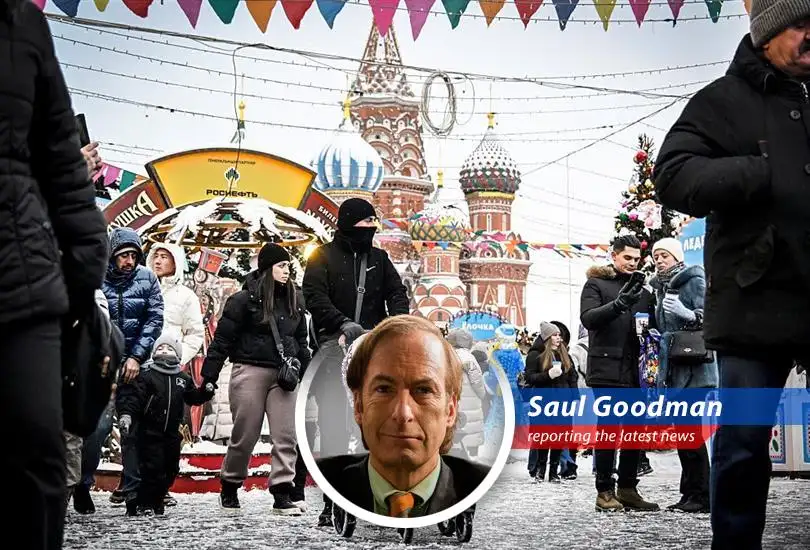
- Russia has blocked WhatsApp, citing non-compliance with data storage laws.
- The Kremlin is promoting "Max," a state-backed messaging app, as an alternative.
- Critics argue Russia's actions aim to control information and suppress dissent.
- Telegram is also facing increased scrutiny and restrictions in Russia.
WhatsApp Gets the Hammer: A Slippin' Jimmy Special
Well, folks, looks like someone's been a bad kitty. Russia, in a move that's about as subtle as a mariachi band at a funeral, has blocked WhatsApp. Yep, the Kremlin confirmed it faster than I can conjure up a 'get out of jail free' card. Their reasoning? Something about WhatsApp not playing nice with Russian data laws. But let's be real here, it probably has more to do with control than cybersecurity.
Meet Max: The Messenger of the Motherland
Enter "Max," the shiny new state-backed messenger app. The Kremlin's touting it as the accessible alternative, a national treasure. Sure, it is accessible... to the government, that is. WhatsApp claims Russia tried to "fully block" its messaging service in order to force people toward Max, which it described as a "surveillance app." I'm sure it is all on the up and up and has nothing to do with keeping tabs on citizens like a hawk watches a dropped ice cream cone. Speaking of secrets and privacy, have you seen Elon Musk's Emails with Epstein Revealed in Newly-Released Documents? Now *that's* a story that makes you wonder what's really going on behind the scenes. Just remember, kids, sometimes the squeaky wheel gets the grease, and sometimes it just gets replaced with a government-approved model.
Data, Data Everywhere, But Not a Byte to Share?
Roskomnadzor, Russia's telecom watchdog, is playing hardball. They're accusing WhatsApp and Telegram of failing to store Russian user data inside the country. It's like telling someone they can't keep their stash of cash in their own backyard anymore. "It's not personal, it's strictly business," I imagine them saying, channeling their inner Michael Corleone. Of course, critics say this is just a smokescreen to restrict freedom of expression and monitor dissent. You know, the old "carrot and stick" approach, except the carrot is made of surveillance and the stick is a government ban.
Telegram's Troubles: A Dubai Detour Gone Wrong
Telegram, founded by some Russian tech wizards but headquartered in Dubai, has also become a target. Users are reporting sluggish performance, which is code for "we're slowing things down so you'll switch to Max." Last August, they even partially restricted calls on both Telegram and WhatsApp. It's like watching a slow-motion train wreck, except instead of mangled metal, it's mangled communication.
The Law is the Law... Or Is It?
Kremlin spokesman Dmitry Peskov insists that Roskomnadzor's actions are simply because these companies aren't complying with Russian law. "It's a shame the company isn't complying, but there's a law that must be followed," Peskov told TASS. Right, because laws are always fair and just, aren't they? I mean, I've never had any run-ins with the law myself. *cough*
Open to Work... As Long as You Toe the Line
Roskomnadzor claims they're open to working with any internet resource, domestic or foreign, as long as they respect Russian law and its citizens. That's like saying I'm open to working with anyone as long as they do exactly what I tell them. Translation: "Welcome to Russia, now bend over."
Russia WhatsApp Max Telegram Roskomnadzor Kremlin censorship surveillance data privacy freedom of expression
Comments
From Saul Goodman





Breaking News






All Rights Reserved © 2023
becks
There's always a way around censorship.
kellyvbrown
Governments need to respect privacy.
Thomen2010
I hope other countries don't follow suit.