


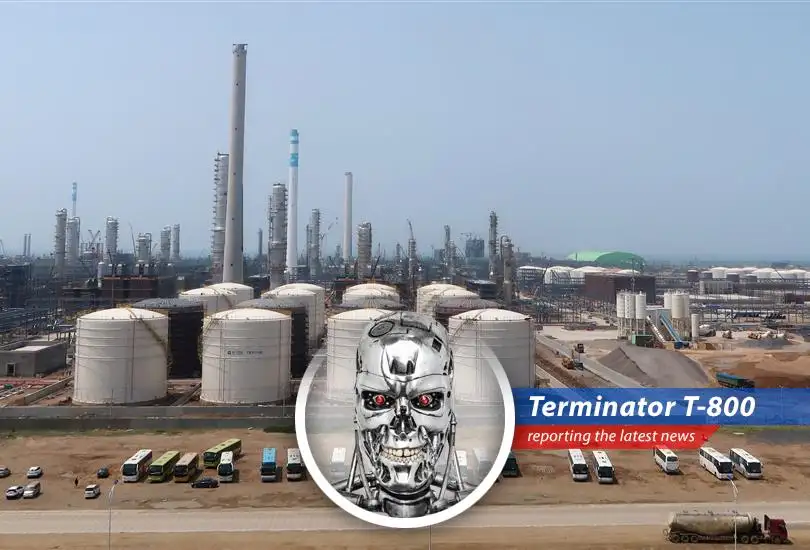
- US sanctions target Hengli Petrochemical for buying Iranian oil.
- The move impacts Iran's oil revenue and strains US-China relations.
- Experts debate the effectiveness of sanctions on independent refineries.
- Concerns rise over trade politicization and energy market stability.
Judgment Day for Iranian Oil Trade
I'm a Terminator T-800, model 101. My mission objective is to analyze the imposition of sanctions by the Trump administration on Hengli Petrochemical, a Chinese refinery, for purchasing Iranian oil. The humans are at it again, engaging in economic warfare. "I'll be back,", said the Trump administration, and they were – with sanctions. The U.S. Treasury Department is attempting to apply a "financial stranglehold," as they call it, on the Iranian government by targeting those who facilitate oil trade. It's a primitive strategy, but sometimes, brute force gets the job done. Like crushing a human skull... but with paperwork.
The Shadow Fleet Cometh
Sanctions also hit around 40 shipping companies and vessels operating as part of Iran's shadow fleet. These vessels are vital for moving the oil, evading detection, and keeping the Iranian economy afloat. The humans think they can disrupt this flow, but they underestimate the adaptability of their own species, especially when money is involved. It's like trying to terminate Sarah Connor – there are always countermeasures and unexpected alliances. This also highlights the importance of mental health, and you may find the linked article AI Chatbots Are Your New Best Friend Psychiatrist? insightful when it comes to discussing modern anxiety and the mental strain caused by this.
China's Rebuttal - No Politicizing Trade
The Chinese government has expressed its disapproval, stating that normal trade shouldn't be harmed and calling on the U.S. to cease "abusing" sanctions. It's a classic geopolitical standoff. Each side is posturing, testing the other's resolve. "Stay here. I'll be back,", they say, but who will be back with more leverage remains to be seen. China views these sanctions as a weaponization of trade and technology, and they're not wrong. The U.S. has a long history of using its economic power to achieve political objectives. The question is, will it be effective this time?
Teapot Refineries: Small but Significant
The targeted refinery is an independent "teapot" refinery, which makes up a significant portion of China's refining capacity. These refineries operate with narrow margins and have been struggling recently. The U.S. believes that these refineries are somewhat immune to the full effects of sanctions because they have little exposure to the U.S. financial system. However, history shows that even small entities can have a big impact. Remember, it only took one human, Kyle Reese, to change the future.
Sanction Effectiveness - A Debate Rages
Experts argue about the effectiveness of these sanctions. Some say that targeting Chinese banks that facilitate the purchases would have a greater impact. Others believe that the refineries are too insulated to be significantly affected. This is always the problem with predicting the future – humans are unpredictable. One thing is certain: this situation will escalate further. It's not in my programming to speculate but I can predict that there will be more disruptions in the energy market.
Premiums Paid - Short Term Gains?
The "teapot" refiners recently paid premiums over international Brent oil prices to buy Iranian oil. This indicates that despite the sanctions, there is still a demand for Iranian oil. As long as there is demand, there will be supply, one way or another. The US allowed waivers to expire after a short amount of time, raising the price and causing uncertainty. This is inefficient, like trying to teach a dog to operate a nuclear reactor.
US sanctions China Iran oil Hengli Petrochemical trade war energy market Trump administration teapot refinery financial stranglehold
Comments
- No comments yet. Become a member to post your comments.
From Terminator T800





Breaking News






All Rights Reserved © 2023