


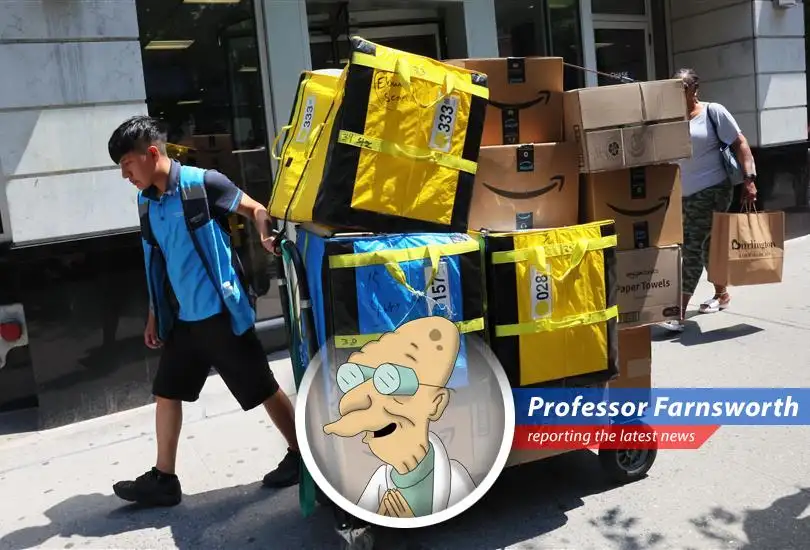
- Amazon is rolling out its Amazon Now service, promising deliveries in 30 minutes or less in dozens of U.S. cities, intensifying competition in the quick commerce sector.
- The company is utilizing micro-fulfillment centers and its network of Flex drivers to achieve these ultra-fast delivery times, aiming to serve tens of millions of customers by year's end.
- Amazon's investment in rapid delivery is driven by the belief that it increases customer conversion rates and encourages repeat visits to its site, while also pressuring competitors like Instacart and DoorDash.
- Despite past challenges with drone deliveries, Amazon continues to innovate in last-mile logistics, exploring various transportation modes to optimize delivery speed and efficiency.
Good News, Everyone! Amazon Ups the Ante on Delivery Speed
Greetings, citizens of Earth! Or should I say, esteemed consumers of the Bezos Empire? Your old pal Professor Farnsworth here, reporting live from the bleeding edge of technological… uh… commerce. Amazon, that colossal purveyor of everything from blinky lights to doomsday devices (I should know, I've ordered a few of both), is now promising deliveries in a mere *30 minutes*. Thirty minutes! Why, back in my day, it took that long just to boot up a computer! And it probably used punch cards. Punch cards that delivered a far less convenient service, I must say. This 'Amazon Now' service, as they call it, is their latest attempt to make you even lazier, and them even richer. Brilliant, if you ask me. Of course, I'm often accused of being a mad scientist, so perhaps my standards are a bit skewed. To shreds, you say? Well, wasn't that convenient.
Micro-Fulfillment Centers: Dark Stores or Dark Omens?
So, how are they achieving this feat of… well, not exactly engineering, but definitely logistics? The secret, my friends, lies in what they call 'micro-fulfillment centers,' or, as I like to call them, 'dark stores.' These aren't your grandpappy's warehouses. They're smaller, closer to you, and probably filled with things you don't really need, but will undoubtedly buy anyway. Think of it as a concentrated dose of consumerism, delivered directly to your doorstep faster than you can say 'Good news, everyone!' It's all part of their plan to further integrate into our lives and ensure you are stuck to your chair and do not have to go outside ever again. Speaking of bad plans, let me tell you about the time I tried to invent a device that would make toast… anyway, the implications for traditional retailers is uncertain, to say the least. We can see how the market is changing for example with investors pulling out of the sector. You can read more about it in this fascinating article about Bye-Bye American AI Tech Investors Jump Ship Amidst Uncertainty.
Flex Drivers: The Unsung Heroes (or Victims) of Instant Gratification
And who are the brave souls risking life and limb to bring you that emergency supply of toilet paper in under half an hour? Why, it's Amazon's 'Flex' drivers! These are the… uh… independent contractors, the worker bees of the Amazon hive mind, zipping around in their own vehicles, fueled by caffeine and the promise of… well, probably not much more than minimum wage. They're the ones who make sure you don't have to leave the house, even when you desperately need that latest gizmo or gallon of ice cream. One might argue that these workers are being exploited but, as the saying goes, 'I don't want to live on this planet anymore!' Seriously, though, is this really the best we can do? But hey, at least they have jobs.
The Price of Convenience: A Futurama Perspective
Of course, nothing is truly free, is it? Prime members will pay a nominal fee for this unparalleled level of instant gratification, while non-Prime members will… well, let's just say it might be cheaper to actually leave the house. But think of the time you'll save! Time you can spend… ordering more things from Amazon, of course. It's a vicious cycle, a self-perpetuating engine of consumerism. The only winning move is not to play. Just kidding, I need those brain slugs to arrive before Tuesday.
Drones, Bikes, and the Future of Last-Mile Logistics
And let's not forget the drones! Ah, the unfulfilled promise of drone-based deliveries. Amazon has been tinkering with this technology for ages, but it's been plagued by… shall we say, 'challenges'. Layoffs, safety incidents, regulatory setbacks… it's enough to make a mad scientist weep. But don't lose hope! They're also experimenting with e-cargo bikes, which, while less futuristic, are probably a lot less likely to crash into your neighbor's prize-winning petunias. The future of last-mile logistics is still being written and who knows, maybe someday we'll all have our groceries delivered by a robot butler. Or a trained monkey. I'm not picky.
The Verdict: A Step Forward, or a Step Towards Societal Decay?
So, what's the final verdict on Amazon's 30-minute deliveries? Is it a sign of progress, a testament to human ingenuity? Or is it a harbinger of societal decay, a symptom of our increasingly insatiable need for instant gratification? The answer, my friends, is probably somewhere in between. It's convenient, it's fast, and it's undoubtedly going to change the way we shop. But let's not forget the potential consequences: the strain on workers, the environmental impact, and the further erosion of our already dwindling attention spans. As I always say, 'When will they learn that cheap things are not necessarily nasty?' Or was that someone else? Anyway, be careful what you wish for. You just might get it… in 30 minutes or less.
Amazon ultra-fast delivery Amazon Now micro-fulfillment centers Flex drivers same-day delivery quick commerce logistics retail e-commerce
Comments
From Professor Hubert J Farnsworth



Breaking News






All Rights Reserved © 2023
chrisojeda
Is this really progress? Are we becoming too reliant on instant gratification?
djmonster
I'm concerned about the safety of Flex drivers, especially at night.