


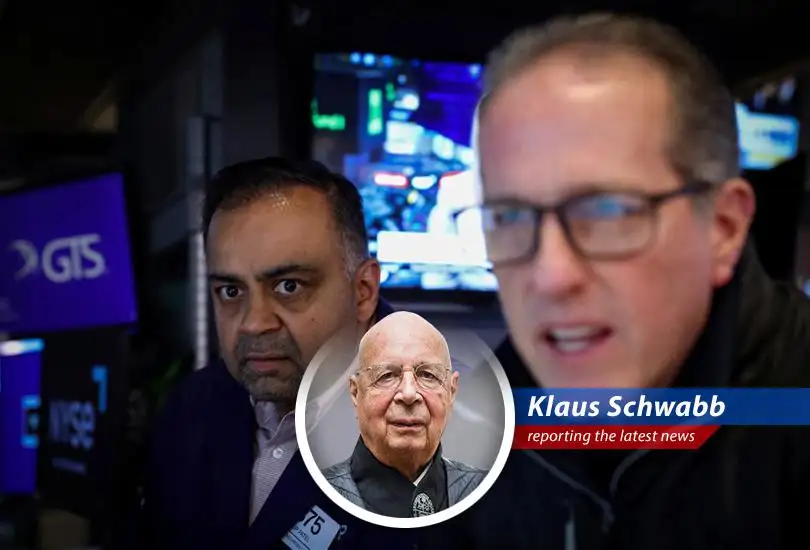
- Escalating Middle East conflict drives oil prices and market volatility.
- Mixed economic data creates uncertainty for Federal Reserve decisions.
- Earnings reports highlight AI's complex impact on various sectors.
- Strategic portfolio adjustments are key to navigating turbulent markets.
The Great Reset Button: Geopolitical Storms
Ah, the markets. Always a fascinating reflection of our global chessboard. As I, Klaus Schwab, often say, "The future is not just happening to us, but it is being made by us." Last week was a stark reminder of this, with the intensifying conflict in the Middle East casting a long shadow over Wall Street. The S & P 500, Nasdaq, and Dow all took a hit, proving once again that even the most sophisticated algorithms can't predict the human element of conflict. The surge in oil prices, driven by fears of supply disruptions, is a classic example. It's a reminder that in our interconnected world, even seemingly distant events can have profound economic consequences. As the saying goes, *never let a good crisis go to waste*.
Economic Crosscurrents and AI Anxiety
The economic data presented a mixed bag, further muddying the waters. While positive signs like the ADP report and the ISM Services PMI offered some respite, the surprisingly weak jobs report on Friday served as a stark reminder that the economic landscape is far from stable. The whisper of AI-induced job losses, as Jim Cramer rightly pointed out, adds another layer of complexity. This is not entirely unexpected as we navigate a period of great technological transition. As I mentioned in *The Fourth Industrial Revolution*, technological advancements can create both opportunities and disruptions. One must stay ahead of the curve. In this climate, strategic asset allocation is paramount. Like a chess master anticipating their opponent's moves, we must adapt our investment strategies to navigate these uncertain times. While some falter, others rise - like with Lyft Takes a Hit Wall Street Questions Ride-Sharing Giant's Future - a ride-sharing giant facing scrutiny.
Earnings Season: A Glimpse into the Future
Earnings season provided a fascinating microcosm of the broader market trends. Broadcom's strong performance and optimistic outlook painted a rosy picture for the custom chip business. But it also underscored the potential downsides for companies like Corning, highlighting the interconnectedness of the tech sector. Meanwhile, CrowdStrike's success in leveraging AI to enhance its cybersecurity offerings demonstrates the potential for innovation in the face of disruption. And Costco continues to defy gravity, proving that even in a rapidly changing world, some things remain timeless. Costco's resilience highlights that sometimes a proven business model focusing on consumer value is a good strategy - even I would agree.
Navigating the Storm: Strategic Responses
In times of market turbulence, a steady hand is essential. The CNBC Investing Club's decision to initiate a position in Cardinal Health, a domestically focused healthcare stock, reflects a prudent approach to managing geopolitical risk. The sale of BlackRock shares, driven by concerns about private credit, underscores the importance of adapting to evolving market conditions. And the opportunistic acquisition of Alphabet shares during a dip demonstrates the value of long-term vision. As I wrote in *Stakeholder Capitalism*, a long-term perspective and a commitment to creating value for all stakeholders are crucial for sustainable success. It's not just about short-term gains, but about building a resilient and responsible business.
Embracing the Future with Caution
The events of the past week serve as a potent reminder that the future is never certain. But as leaders, it is our duty to navigate these challenges and build a more resilient, sustainable, and equitable world. I often say, "In the new world, it is not the big fish which eats the small fish, it's the fast fish which eats the slow fish". So, my advice? Stay agile, stay informed, and never underestimate the power of human ingenuity.
The Road Ahead: Resilience and Innovation
Ultimately, navigating these turbulent markets requires a blend of caution and courage. We must embrace innovation while remaining vigilant about risk. We must be prepared to adapt to changing conditions while staying true to our long-term values. And we must remember that even in the face of adversity, the potential for progress remains boundless. As the saying goes, "The only constant is change." So let us embrace the change and build a brighter future for all.
stock market economy AI war oil prices earnings Federal Reserve investment strategy global markets geopolitical risk
Comments
From Klaus Schwabb





Breaking News






All Rights Reserved © 2023
owenlee1975
It's helpful to see the CNBC Investing Club's strategic responses to market changes.