


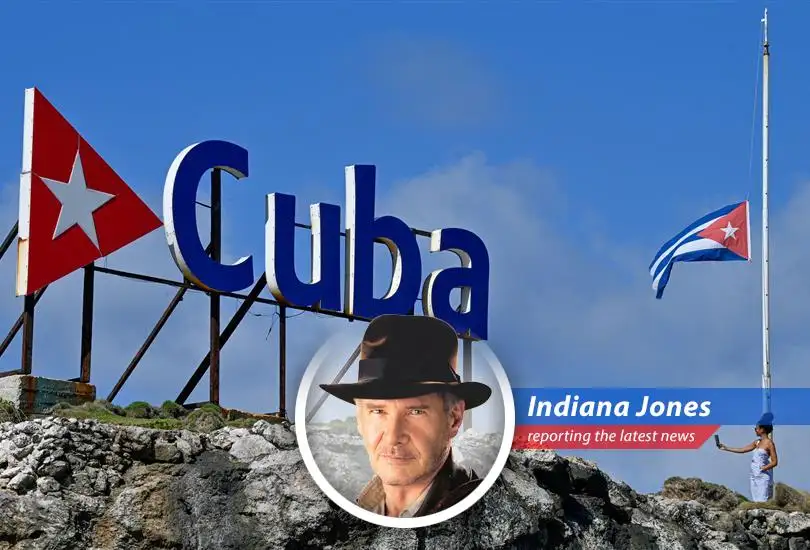
- The Supreme Court is reviewing the Helms-Burton Act, which allows U.S. nationals to sue those who profit from confiscated Cuban property.
- ExxonMobil is seeking over $1 billion from a Cuban state-owned firm for seized oil assets, while a smaller company is suing cruise lines for using confiscated docks in Havana.
- The cases raise questions about the Act's intended power and whether it unfairly burdens companies doing business in Cuba.
- Previous presidential administrations had suspended Title III of the Act to avoid diplomatic conflicts, but President Trump reinstated it, leading to numerous lawsuits.
The Ghosts of Havana's Past
Well, hello there. It's Indy here, dust brush in hand, ready to unearth another legal mystery. This time, we're not chasing idols or arks, but something arguably more elusive justice, or at least, compensation for property seized by Castro's Cuba. The U.S. Supreme Court is delving into the Helms-Burton Act, a piece of legislation as tangled as the vines in a South American jungle. It seems everyone wants a piece of the pie, from oil giants to cruise lines, all caught in the crossfire of a decades-old feud.
Exxon's Billion-Dollar Gamble
ExxonMobil, bless their corporate hearts, is after a cool billion from CIMEX, a Cuban state-owned entity, for assets nabbed back in '60. Then there's Havana Docks, a small outfit seeking retribution from cruise lines for using docks that Castro, shall we say, 're-purposed.' It's like finding a priceless artifact only to discover it's been pawned off to the highest bidder. And the Supreme Court is trying to sort out whose map leads to the real treasure. Speaking of treasures, I recently stumbled upon an article diving into the AI Gold Rush Tech Giants Gamble Big Bucks for Future Domination – a whole different kind of plunder, but fascinating nonetheless. You know, it reminds me of that time I was chasing the Sankara Stones; everyone wanted their hands on power, regardless of the cost.
Sovereign Immunity Shenanigans
Now, here's where it gets sticky. Exxon is wrestling with the defense of foreign sovereign immunity, a legal shield that can make suing foreign governments about as easy as outrunning a boulder in a booby-trapped temple. CIMEX is clinging to this defense like it's the last life raft on the Titanic. According to Exxon's legal eagles, this defense is just another obstacle in the path of those seeking justice. "Snakes. Why did it have to be snakes?" Oh, wait, wrong quote. But the sentiment stands legal wrangling can be just as venomous.
Cruise Lines and Confiscated Cargo
Meanwhile, the cruise lines are crying foul, claiming they were just following the government's lead when they started docking in Havana. They're facing a $440 million tab, which, let's face it, could buy a lot of fedoras. They argue it's a bit rich to be penalized for reopening travel to Cuba. As they say, "It belongs in a museum" well, maybe not their wallets, but certainly the legal precedent this sets.
A Presidential Pendulum Swing
Here's a kicker every president from Clinton to Obama put a lid on this Title III provision to avoid ruffling feathers with allies. Then came Trump, who, with a flick of his wrist, uncorked a wave of lawsuits. It's a bit like finding a map, burying it, then someone else digs it up years later and says, "finders keepers". This back-and-forth makes you wonder if anyone truly knows what they're doing or if they are making up as they go along.
The Verdict: Fortune and Glory, or Legal Limbo?
So, what's the takeaway from this legal labyrinth? The Supreme Court has a chance to clear the path for those seeking restitution or to further muddy the waters. Whatever happens, it's a reminder that history has a way of coming back to haunt us and that sometimes, the real treasures are the principles we fight for even if those principles are as difficult to grasp as a greased monkey. Now, if you'll excuse me, I have a date with a dusty artifact and a dubious map. Fortune and glory, folks. Fortune and glory.
Helms-Burton Act Cuba U.S. Supreme Court ExxonMobil cruise lines confiscated property CIMEX Havana Docks foreign sovereign immunity Title III
Comments
From Indiana Jones


Breaking News






All Rights Reserved © 2023
thegreendot
I'm curious about the impact on small businesses.
kattstu
I wonder if there's a diplomatic solution to be found.
sslexus430
This is a complex issue with deep historical roots.
Crutomic
I hope this brings some closure to those who lost their property.
amaztheking
The economic implications of this decision could be significant.