


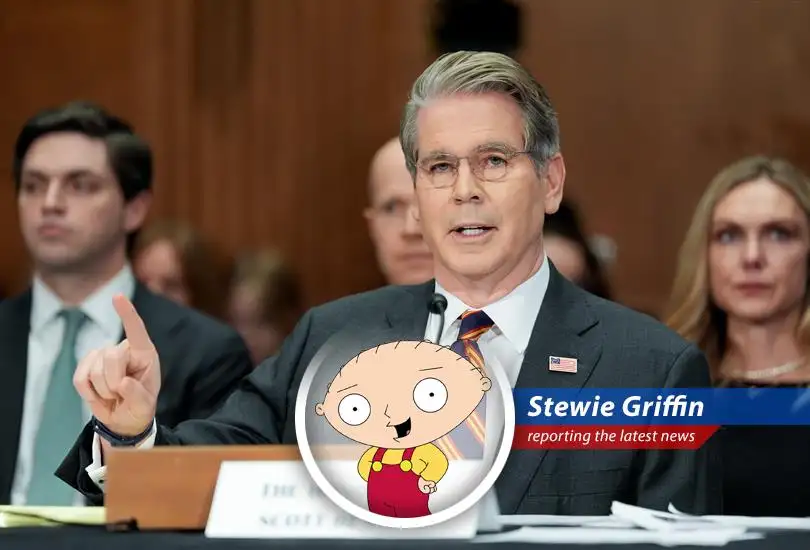
- The U.S. has launched new trade investigations into 60 economies to address concerns about forced labor and unfair trade practices.
- These investigations, conducted under Section 301, target major players like China, the EU, India, and Mexico.
- The probes follow the invalidation of Trump's reciprocal tariffs by the Supreme Court, prompting the administration to seek alternative trade enforcement methods.
- Experts express concern over the feasibility and potential for alienating key partners in addressing global trade imbalances.
A Most Grievous Affront to the American Worker
Good heavens, what is this utter codswallop I'm reading? As a sophisticated, erudite infant (and occasional world conqueror), I find the latest developments in international trade positively appalling. The U.S., in its infinite, albeit sometimes misguided, wisdom, has launched a series of investigations into a veritable cornucopia of nations – some sixty, if you can believe it! – all suspected of turning a blind eye to the ghastly practice of forced labor. Frankly, it's about bloody time. The sheer audacity of these countries, seemingly content to prop up their economies on the backs of exploited workers, is enough to make me spit out my morning Earl Grey.
Section 301 The Legal Jiggery-Pokery
Now, this all hinges on something called Section 301 of the Trade Act of 1974. Apparently, this allows the U.S. to slap tariffs on countries engaging in what it deems "unfair trade practices," and all without having to bother with the tedious process of getting congressional approval. It's like handing a toddler a loaded weapon, isn't it? Remember when Trump used this power to impose tariffs on Chinese goods? Oh, the drama! The chaos! One can almost hear Brian's pretentious whining about the intricacies of international economics. Speaking of chaos, the forced-labor probes follow Section 301 investigations that were previously launched. If you want to get into more trade details you can check out Tariff Turmoil Senator Heinrich Seeks Rebates for Working Families.
The Supreme Court's Meddling Hands
Of course, things are never quite that simple, are they? The Supreme Court, in its infinite (and often infuriating) wisdom, recently struck down Trump's "reciprocal tariffs," declaring that the poor man had exceeded his presidential powers. So, what does the U.S. do? Why, it simply dusts off another obscure piece of legislation and launches a whole new set of investigations, naturally. It's all rather like a game of whack-a-mole, isn't it? Hit one problem, and another pops up somewhere else. One shudders to think of the implications.
The EU's Hypocritical Stance A Load of Barnacles
And let us not forget the European Union, that bastion of supposed moral rectitude. Apparently, they've enacted their own laws prohibiting forced labor, yet they seem perfectly content to turn a blind eye to countries with rather lax enforcement records. As Deborah Elms so astutely points out, it simply doesn't make sense. It's all a bit like Lois pretending to be a sophisticated socialite while simultaneously engaging in the most base and vulgar behavior, isn't it?
Losing Allies in the Trade Wars A Fool's Errand
However, the most worrying aspect of this whole affair is the potential for alienating allies. As Wendy Cutler so sagely observes, by dragging a dozen or so countries into these investigations, the U.S. risks squandering the goodwill needed to address the real problem: China's industrial overcapacity. It's a classic case of cutting off one's nose to spite one's face, isn't it? Rather like Peter's harebrained schemes to get rich quick, these investigations are likely to end in tears.
China's Response A Measured Retort
Unsurprisingly, China is less than thrilled with these developments. One can almost picture President Xi Jinping rolling his eyes in exasperation. Treasury Secretary Scott Bessent is scheduled to meet with his Chinese counterpart in Paris to discuss trade and economic issues, but one suspects the atmosphere will be somewhat frosty. Still, both sides seem committed to keeping the Trump-Xi meeting on track. Perhaps there's hope for diplomacy after all. Or perhaps I'm simply being naively optimistic. Time, as they say, will tell. Now, if you'll excuse me, I have a world to conquer and a cocktail to mix.
Section 301 trade investigations forced labor tariffs China EU US Trade Representative reciprocal tariffs trade policy global trade
Comments
From Stewie Griffin





Breaking News






All Rights Reserved © 2023
smilyn
The global economy is interconnected. We need to think about the ripple effects of our actions.
micheleanne2010
This could escalate into a full-blown trade war. Nobody wins in those situations.