



- Dublin data center pioneers Europe's first islanded microgrid, addressing power connection delays and the growing demands of AI workloads.
- Ireland eases data center moratorium, mandating renewable energy sourcing and dispatchable power capabilities for new facilities.
- Global microgrid market poised for growth, with companies investing in sustainable and reliable power solutions.
- Challenges remain in regulatory hurdles and ensuring the long-term sustainability of microgrid power sources.
Beets, Bytes, and Blackouts: A Schrute Farms Special Report
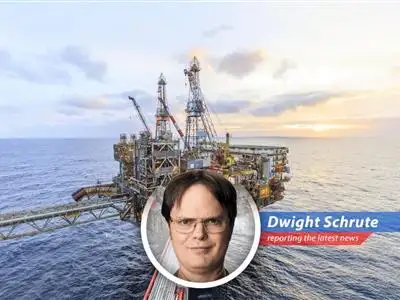
As Assistant Regional Manager (and volunteer Sheriff's Deputy), I, Dwight K. Schrute, am uniquely qualified to report on this electrifying development. News out of Ireland indicates that a data center near Dublin has achieved something revolutionary: an islanded microgrid. This is akin to Schrute Farms becoming entirely self-sufficient, but with more servers and less manure. The European Commission estimates a need for over 1.2 trillion euros in investments by 2040. Clearly, the grid is strained, much like Michael Scott's management abilities under pressure.
Island Life: The Data Center's Declaration of Independence
Pure Data Centre Group, in collaboration with AVK, has essentially declared energy independence. This Dublin facility represents the first step towards a privately powered ecosystem. Think of it as a digital Schrute Farms, generating its own power and distributing it efficiently. Microgrids are localized energy systems that can generate, store, and distribute power. This is nothing new in the US but Europe has been slow to adopt. And to dive deeper into the competition and the innovative strides being made in the AI infrastructure landscape, check out AMD's Risky Gambit Chasing Nvidia's AI Crown to see how other companies are strategizing their approach.
The Irish Energy Crisis: A Moratorium Interrupted
Ireland, much like Scranton under Michael Scott's leadership, faced an energy crisis. A moratorium on new data center applications was enforced, because these energy-intensive facilities consumed a staggering 22% of the nation's power in 2024. But alas, the AI boom changed everything. It's as if someone finally realized that beets are not just a root vegetable but a powerful source of energy (both literal and metaphorical). The moratorium was eased, with new data centers required to source at least 80% of their annual demand from renewable electricity generated in Ireland.
Dispatchable Power and Battery Storage: The Future is Now
The Dublin data center, with a total capacity of about 110 megawatts, can run both cloud and AI workloads. It is currently powered by natural gas engines, but it has the ability to switch to Hydrotreated Vegetable Oil (HVO) and has even trialled biomethane as a power source. This is akin to Schrute Farms diversifying its crops beyond beets, which is essential for long-term sustainability.
Global Microgrid Market: A Billion-Dollar Opportunity
The global microgrid market was worth around $29 billion in 2025, with Europe's market expected to grow significantly. Companies like ABB and Siemens are racing to develop the technology. Siemens sees "potential opportunities" for implementing microgrids at data center locations and is currently in discussions with several customers. Clearly, the future is bright, much like a freshly polished beet.
Sustainability and Reliability: The Ultimate Test
One of the biggest challenges facing the market is how microgrids are deployed sustainably. Ensuring the power supply is reliable and overcoming regulatory hurdles will also be key. In the U.S., around 30% of data centers are adopting microgrid or other behind-the-meter solutions. In Europe, the share was just 5–10% 18 months ago, but has since already risen to about 20%. As Dwight Schrute, I advocate for a sustainable and reliable future, one beet at a time.
data centers microgrids Ireland renewable energy AI power grids sustainability Europe energy infrastructure technology
Comments
From Dwight Schrute




Breaking News






All Rights Reserved © 2023
palwinder
The shift towards renewable energy sources is crucial.