


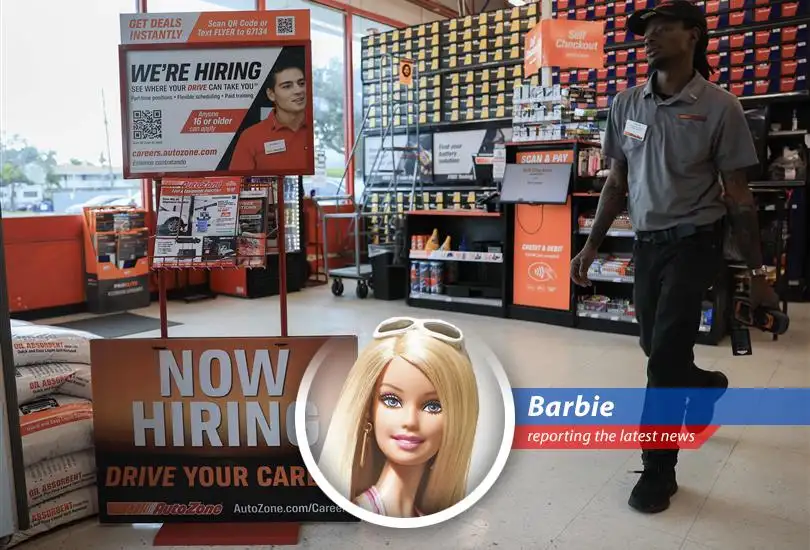
- The 'Great Resignation' is subsiding, with a significant decrease in employees quitting for new opportunities.
- Pay disparity between job switchers and stayers is narrowing, indicating less financial incentive to change jobs.
- The labor market is experiencing a period of low hiring and low firing, leading to reduced dynamism and talent reallocation.
- Industries like leisure and hospitality show pay advantages for job stayers, while construction still favors switchers due to labor shortages.
The Pandemic's Echo A Labor Market Transformed
Hi everyone, Barbie here reporting live from the workforce frontlines. Remember the 'Great Resignation'? It feels like only yesterday everyone was quitting their jobs faster than I can change outfits. The pandemic really shook things up, creating this wild west of opportunity where workers had the upper hand. It was all about 'Come on, Barbie, let's go party...to a better job!' with higher pay and more perks. But like all trends in Barbie Land, things change, and sometimes, they change fast. We saw record numbers of people leaving their jobs to find something better, as companies just couldn't fill those vacancies. It felt like a dream come true for job seekers.
From Great Resignation to The Big Stay
The party's slowing down, dolls. The Bureau of Labor Statistics says those 'quit' numbers have dropped by almost a third since 2022, and job openings have shrunk right along with them. It's like the music stopped, and everyone's scrambling for a chair. The difference in pay raises between people who stay in their jobs and those who leave has almost disappeared, from 8.4 percentage points down to just 1.9 percentage points. ADP, the payroll people, started keeping track of this in 2020, and this is the lowest it's been since then. It's what they're calling the 'Big Stay'. The job market is more stable now, meaning less hiring and less firing, which isn't always a bad thing. Want to dive deeper into similar shifts? Roche and Sanofi Navigate Patent Cliff Tensions with Bold Innovation Plays explores how major companies are adapting to new economic realities, a theme we're seeing across industries. It's a significant trend for us workers, impacting how we navigate our careers and finances.
A Pendulum Swing of Labor Dynamics
Nela Richardson, the big-brain economist at ADP, put it this way: 'It's a very stable labor market. There's very little hiring, very little firing. It's an outgrowth of the pandemic from where it was all hands on deck.' Back in the day, companies were desperate for workers, adjusting to new hybrid work setups. Now, the pendulum's swung back. There are more workers than jobs available. But don't freak out. Layoffs are still low, and the unemployment rate is only 4.3%. If you dropped into this labor market from any time in history, you'd be pretty happy. But the details are what matter.
Industry Insights Pay Trends Unveiled
It's not the same everywhere, loves. In the fast-moving leisure and hospitality world, people who stay put are getting better raises. But in construction, where they're dealing with labor shortages, switching jobs still pays more. Overall, switching jobs still gets you more money, around 6.4% annual pay growth, compared to 4.5% for staying put. But that gap is closing, which might make you think twice before dusting off your resume.
New Trends A Fresh Flock of Job Seekers
There are a lot more people out there looking for jobs right now. Job searches jumped 31% in January, but the number of job postings hasn't really changed. Experts at Indeed Hiring Lab, Laura Ullrich and Sneha Puri, say that people looking for jobs in 2026 will find fewer openings and longer hiring times. Some industries are still hiring a lot, but the overall feeling is 'low-hire, low-fire' stagnation. Even though the unemployment rate is low, Richardson is worried about the 'lack of dynamism' in the labor market. Most of the hiring is in healthcare, and people aren't moving around as much.
The Talent Shuffle Is the Economy Suffering
Richardson made a really good point. 'The fact that it is low-hire, low-fire is actually not a great state to be in. The churn is important to the productivity growth,' she said. 'You want to see the most talented go to the places where that talent is the most rewarded. And if we are in this really stable period, that means that talent is not being repositioned to its best use.' So, even though things seem stable, we need a little bit of that 'Barbie dreamhouse' energy: always changing, always evolving, always finding the best place for everyone to shine. Because, remember, we can be anything…even economists. This is Barbie, signing off.
labor market great resignation big stay job mobility pay disparity employment trends hiring firing unemployment rate ADP
Comments
- No comments yet. Become a member to post your comments.
From Barbie




Breaking News






All Rights Reserved © 2023