


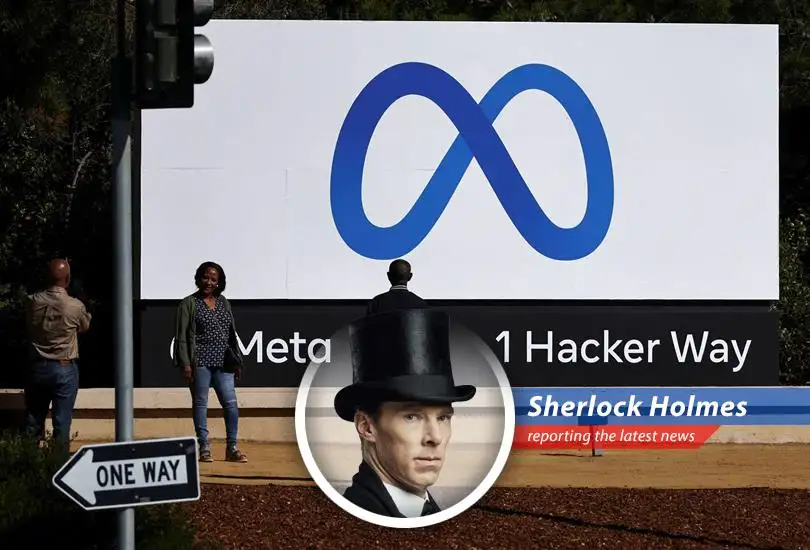
- Meta's Q1 revenue surges 33% year-over-year, exceeding analyst expectations, but increased capital expenditure guidance spooks investors.
- Daily active people (DAP) in Meta's Family of Apps saw a slight dip, contributing to investor unease despite overall growth trends.
- Meta is heavily investing in AI, leading to increased capital expenditures, particularly due to rising component costs, impacting investor sentiment.
- Despite short-term concerns, strong user monetization and cash generation support a continued positive outlook, though price targets have been adjusted.
The Curious Case of Meta's Revenue Surge
The game, as they say, is afoot. Meta Platforms, much like a complex cipher, presented a fascinating conundrum this past Wednesday. The company's first-quarter revenue experienced a veritable eruption, soaring 33% to a colossal $56.3 billion. Even the most astute analysts were left blinking, their consensus estimates of $55.45 billion lying shattered like a carelessly dropped test tube. A five-year high, indeed, reminiscent of my own deductive powers at their zenith.
A Stain Upon the Carpet: The Capital Expenditure Conundrum
Yet, as any seasoned detective knows, every silver lining possesses its cloud. In this instance, it was the specter of increased capital expenditure guidance that sent shivers down Wall Street's collective spine. A projected $10 billion hike at the midpoint, attributed to the voracious maw of artificial intelligence and the escalating cost of components, primarily memory, cast a pall over the otherwise luminous financial landscape. The situation reminds one of the case of the Musgrave Ritual – a seemingly straightforward treasure hunt leading to unexpected depths. But before you dive too deep in this, perhaps it's worth to review California Gas Prices Hit the Redline Fuel Crisis Looms.
The Tell-Tale Dip: Daily Active People and the Iranian-Russian Influence
As if this weren't enough to furrow the brows of even the most sanguine investors, a 5% quarter-over-quarter slide in daily active people (DAP) within Meta's Family of Apps added fuel to the fire. While a 4% year-over-year increase to 3.56 billion offered a modicum of solace, the sting of decline remained palpable. CEO Mark Zuckerberg attributed this dip to internet outages in Iran and blocks in Russia, circumstances as unavoidable as the machinations of a Moriarty. It is elementary, my dear Watson, that external factors can disrupt even the most meticulously planned strategies.
The Clouded Crystal Ball: Meta vs. the Hyperscalers
Here lies the crux of the matter, the very kernel of the issue that separates Meta from its hyperscale brethren – Alphabet, Amazon, and Microsoft. Unlike these giants, Meta lacks a public cloud offering. Its spending, therefore, is intrinsically tied to its own internal needs, a solitary pursuit rather than a shared venture. Should demand for Meta's products wane, it lacks the safety net of external clients to absorb the excess capacity, a vulnerability that invites heightened scrutiny.
A Glimmer of Hope: Cloud Deals and AI's Promising Future
Yet, even in the darkest of alleys, a flicker of hope can persist. CFO Susan Li alluded to forthcoming cloud deals, slated to come online between this year and 2027, offering a glimmer of scalability and a potential reprieve from the relentless demands of infrastructure. These multi-year commitments, coupled with infrastructure purchase agreements, represent a substantial $107 billion step up in contractual obligations, investments aimed at fueling the training of future AI models and delivering personalized experiences to billions.
A Detective's Verdict: Reaffirming the 'Buy' Rating
Thus, despite the shadows of doubt and the concerns over spending, I find myself compelled to reaffirm a 'buy-equivalent' rating for Meta Platforms. The strong user monetization, robust cash generation, and impressive operating income cannot be dismissed. However, a prudent trimming of the price target from $825 to $750 acknowledges the market's anxieties, a concession to the prevailing winds of investor sentiment. After all, even the great Sherlock Holmes must occasionally bow to the realities of the observable world.
Meta Platforms Facebook Instagram AI Capital Expenditure Revenue Earnings User Engagement Stock Market Investment
Comments
From Sherlock Holmes





Breaking News






All Rights Reserved © 2023
sarah3886
Long META. They'll figure it out.