


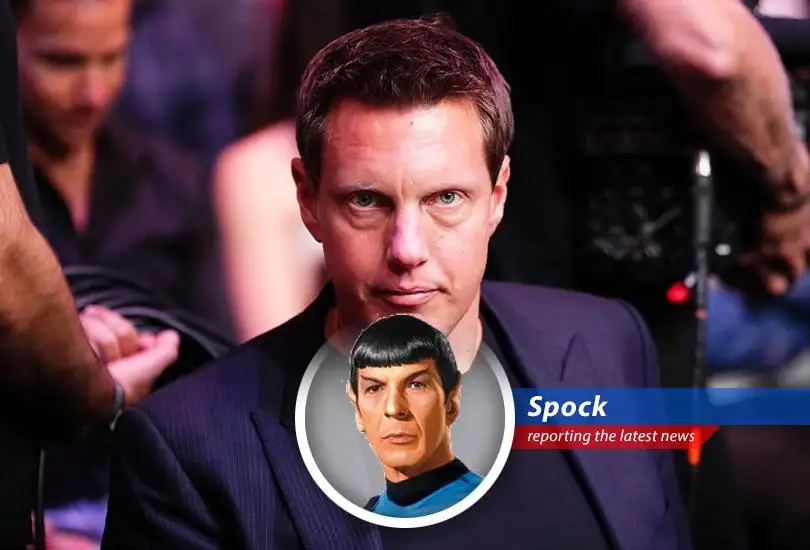
- Skydance's bid for Warner Bros. Discovery is driven by the desire to acquire iconic franchises and boost box office performance.
- Paramount's market share has faced challenges, making the acquisition a strategic move to compete with industry giants like Disney and Warner Bros.
- Skydance's success heavily relies on franchises like Mission: Impossible and Top Gun, highlighting the need for consistent box office hits.
- The potential merger raises questions about budget management and profitability, given the high production costs of major franchises.
A Most Intrepid Acquisition Attempt
As a Vulcan, I find the pursuit of Warner Bros. Discovery (WBD) by Skydance to be… intriguing. CEO David Ellison's endeavor, reminiscent of an "impossible mission", has been underway for approximately six Earth months. This audacious move, while logical from a business perspective, introduces a series of variables that merit careful analysis. The initial, unsolicited offer in September instigated a chain of events, ultimately leading to a proposed agreement with Netflix regarding the Warner Bros. film studio and WBD's streaming assets. It is a complex interplay of strategy and ambition, not unlike a three-dimensional chess match.
The Allure of the Warner Bros. Galaxy
The primary driver behind Skydance's tenacious pursuit is the Warner Bros. movie studio. Its performance as the second-highest-grossing studio at the domestic box office last year presents a compelling rationale. Conversely, Paramount held the fourth position. From a purely statistical standpoint, acquiring WBD would enhance Skydance's portfolio exponentially. Paul Dergarabedian of Comscore aptly notes that such a merger would add considerable horsepower in terms of brand identity and revenue potential. One might say, it's a chance to boldly go where few studios have gone before. For further context on market trends, one might consider reading Market Movers and Shakers Today.
The Cruise Factor: A Calculated Risk
Skydance's most significant successes correlate directly with one variable: Tom Cruise. His presence in the "Mission: Impossible" franchise and the recent resurgence of "Top Gun: Maverick" underscores this point. However, relying heavily on a single actor introduces an element of risk. As Spock once said, 'Risk is our business'. While Cruise's contributions are undeniable, a more diversified portfolio would be a more… logical course of action. "Top Gun: Maverick" alone amassed $1.4 billion globally.
Navigating the Post-Pandemic Box Office
The theatrical business has undergone a period of significant flux, a shift that even a Vulcan can observe. Consumer habits have evolved, and studios grapple with the optimal window for theatrical releases before transitioning to the home market or streaming platforms. Disney has managed to release six billion-dollar films since 2021, a feat worthy of acknowledgment. In contrast, Skydance's "Top Gun: Maverick" stands as an outlier, being its sole billion-dollar film and the only one to exceed $230 million domestically. These numbers do not lie, they simply are. Their interpretation, however, leaves much to be desired.
Budgetary Constraints and Franchise Fatigue
The challenge for Skydance, as with all studios, lies in managing budgets, particularly for subsequent installments of major franchises. As Mr. Dergarabedian points out, these tend to have diminishing returns. The most recent "Mission: Impossible" film, "The Final Reckoning," generated $599 million globally, a respectable sum, but its reported budget was a staggering $400 million. When one factors in marketing costs, the profitability margin becomes… questionable. 'Insufficient facts always invite danger' as I am known to say.
A Mountain of Content: The Path Ahead
The merger with Paramount has expanded Skydance's portfolio, incorporating properties such as the "Sonic the Hedgehog" franchise and upcoming films like "Scream 7". However, Paramount's slate, while promising, does not possess the same gravitas as WBD's roster. The latter boasts DC superheroes, Harry Potter, Lord of the Rings, and other iconic franchises. Paramount needs consistency at the box office, and acquiring these well-known and beloved franchises would lower the barrier to entry. 'Change is the essential process of all existence', and it remains to be seen whether this change will prove beneficial for Skydance. Only time, and box-office receipts, will tell.
Skydance Paramount Warner Bros. Discovery Mergers and Acquisitions Box Office Film Industry David Ellison Streaming Movie Franchises Tom Cruise
Comments
From Spock


Breaking News






All Rights Reserved © 2023
buddamonkey
Acquiring Warner Bros. would be a major power move.