



- Hims & Hers Health is strategically expanding into peptide therapies, capitalizing on potential regulatory changes and market demand.
- The FDA's upcoming review of peptides for compounding could provide a clearer path for Hims to scale its peptide offerings.
- While clinical evidence for some peptides is limited, Hims aims to bring peptide therapy into regulated, physician-led care.
- Investors are eyeing peptides as a key growth driver for Hims, potentially replacing GLP-1 drugs in the future.
Good News Everyone Peptides on the Horizon
Oh my yes, good news everyone! It appears Hims & Hers, that telehealth company—which, if you ask me, sounds suspiciously like a robot dating service—is eyeing peptides. Peptides, you say? Why, they're just short chains of amino acids, like tiny protein LEGOs. Apparently, Health and Human Services Secretary Robert F. Kennedy Jr., who probably knows a thing or two about health, has announced the FDA is considering putting peptides on a 503A bulk list. This means they could be compounded individually rather than mass-produced, much like my patented Smell-O-Scope needs to be assembled. I only hope they don't try to regulate my atomic supermen after this.
Peptide Profits A New Revenue Stream?
Now, why would Hims & Hers be interested in these diminutive proteins? Why, for the same reason I'm interested in dark matter: PROFIT! It seems they see peptides as a way to rake in the dough as they transition away from their more lucrative, compounded GLP-1 drugs. They've been quietly building this peptide business for years, like I've been quietly trying to perfect my doomsday device. Hims CEO Andrew Dudum called it "future-facing innovation." Sounds impressive, but so does my Quantum Finish Nailer, and that only works half the time. Anyway, if you're interested in what else Trump is doing, read this article about Trump Backs Crypto Giants Against Banks in Stablecoin Yield Battle.
Into the Gray Market
But hold on, not so fast! There's a catch, as always. The use of these peptides is controversial. The scientific evidence is limited, and their production is "largely unregulated." Hims Chief Medical Officer Dr. Patrick Carroll seems happy about the change, though. I always say that it's a good move away from what he calls "gray market." I only hope it doesn't have the same problem I have with my quantum tunnel where it makes matter disappear. He mentions the goal is to move it into regulated, physician-led care. Which is nice for Americans looking for a healthier life.
Proceed With Caution
The FDA is having meetings and Leerink Partners are saying it'll take a while for peptides to boost the company's bottom line. But still, they see it as growth. Now, I've seen some growth in my time, like that fungus I grew in the break room fridge back in 2947. But I digress. Before they jump for joy over this prospect, one of the peptides mentioned, MK-677, is sometimes considered an illegal drug for human consumption, especially because it's a growth hormone. As I always say, "I don't want to live on this planet anymore!"
Kennedy's Peptide Push
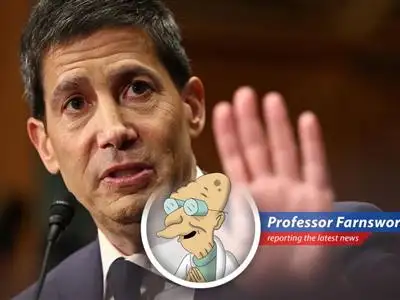
The man himself, Kennedy, spoke about his plans at a House Ways and Means Committee hearing. He claims peptides were "not supposed to be regulated," blaming the Biden administration for safety concerns he deems unfounded. Sounds like someone's been hitting the time-traveling whiskey again! The FDA process is just beginning, and the July meeting is merely advisory. So, don't expect any immediate changes. It's like waiting for Zoidberg to pay his rent—it's never going to happen. Still, investors are hopeful that peptides can replace GLP-1 as a growth driver for Hims. Only time will tell if this venture will turn out like my Smell-O-Scope or a complete debacle.
A Cautious Conclusion
In conclusion, Hims & Hers is betting on peptides, hoping to ride the wave of regulatory changes and market demand. However, as with any new technology, it's important to proceed with caution. After all, as I always say, "When will I learn? The answer is: Never."
Comments
From Professor Hubert J Farnsworth



Breaking News






All Rights Reserved © 2023
tsnyder700
Leerink's cautious outlook is wise. It's important to manage expectations.
angeleyes2222
The focus on physician-led care is reassuring. Regulation is definitely needed in this area.