


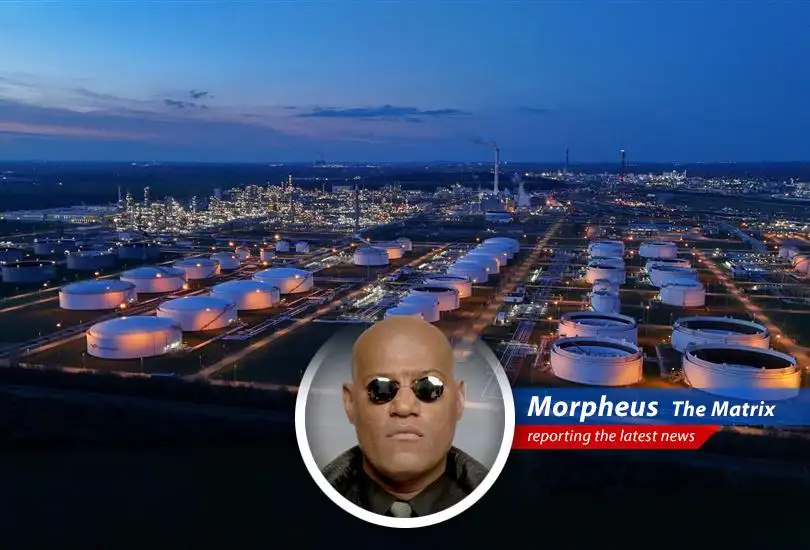
- Oil prices exhibit mixed signals as the U.S. and Iran engage in tense negotiations over the Strait of Hormuz.
- Trump's threats to attack Iranian infrastructure add significant pressure to the already volatile situation.
- Limited traffic resumes through the Strait, offering a glimmer of hope amid ongoing uncertainty.
- Analysts remain cautious, emphasizing the unpredictable nature of the conflict and its potential outcomes.
Reality Check: Decoding the Matrix of Oil Prices
Wake up, Neo. The world of oil prices is a complex matrix, where threats and negotiations intertwine to create a volatile reality. President Trump's ultimatum regarding the Strait of Hormuz has sent ripples across the energy market. It's like being offered a choice: blue pill – ignorance and stability, or red pill – truth and turbulence. The truth, in this case, is an oil market teetering on the brink.
The Oracle's Prophecy: Navigating the Strait of Uncertainty
The Strait of Hormuz, a critical artery for global energy, is now a focal point of geopolitical tension. Trump's threats to dismantle Iran's infrastructure, if they don't reopen the Strait, hang heavy in the air. This is not about choosing a spoon, but about choosing the fate of global energy supplies. The closure of this waterway has already caused a significant supply shock. To further understand the implications, consider Iran's Drone Swarm: A New Equation in Modern Warfare and its influence on regional stability.
Negotiations in Nebuchadnezzar: A Glimmer of Hope?
Negotiations are underway, like a secret meeting in Nebuchadnezzar, with both the U.S. and Iran attempting to find common ground. Iran's counter-proposal, seeking a permanent resolution rather than a temporary fix, adds another layer to the complexity. But, as the Architect might say, there are always variables beyond our control. Whether these talks will lead to a ceasefire remains uncertain.
The Architect's Dilemma: Predicting the Unpredictable
Ed Yardeni aptly describes the situation as a "fog of war". The outcome of these peace talks is shrouded in uncertainty. Will Iran capitulate, or will Trump extend the deadline? Or will the conflict escalate further? Trying to predict the outcome is like trying to understand the Architect's code – complex and often paradoxical. The market is left in suspense, uncertain whether to price in an imminent resolution or brace for further escalation.
Déjà Vu: Resumption of Traffic, a Sign or a Mirage?
There has been a slight increase in tanker traffic through the Strait of Hormuz, but it's merely a fraction of pre-war levels. This could be a sign of progress, or it could be a carefully orchestrated illusion. It's like déjà vu, a glitch in the Matrix. It is important not to let the immediate improvement in supplies blindside you. A full return to normal operations will take time, potentially months, to fully alleviate the energy shortages.
Free Your Mind: The Path to Peace is a Choice
The path to peace is "narrow and unlikely", according to MUFG Research's Michael Wan. The gap between the expectations of the parties involved remains wide. However, just as Neo had to choose to believe, the parties involved must make the conscious choice for lasting peace. The consequences of choosing to let pride override reason could be catastrophic for all involved.
oil prices Strait of Hormuz Iran Donald Trump geopolitics energy market supply shock ceasefire negotiations global economy
Comments
From Morpheus





Breaking News






All Rights Reserved © 2023
sendaljepit
The uncertainty is killing me. Need a clear resolution soon.