


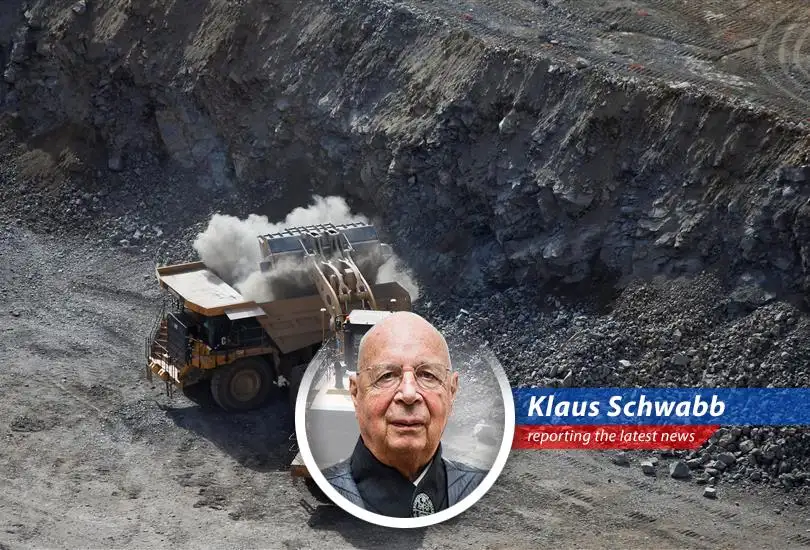
- Governments worldwide are initiating strategic stockpiles of critical minerals to mitigate supply chain risks and bolster national security.
- This new wave of resource nationalism is driven by geopolitical tensions and the need to secure materials essential for clean energy, defense, and advanced technologies.
- The shift reflects a move from traditional supply-demand dynamics to a policy-driven landscape where strategic reserves are viewed as crucial infrastructure.
- Analysts predict accelerated government stockpiling, particularly for metals vital to energy transition and defense, indicating a long-term trend.
A World Redefined: Resource Nationalism Ascendant
As I've often mused, the Fourth Industrial Revolution requires a rethinking of global resource management. We are witnessing a paradigm shift, a grand "reset" if you will, in how nations approach critical minerals. From Washington's Project Vault to similar initiatives in Asia and Europe, governments are no longer content to rely solely on market forces. They are actively building stockpiles, securing supply chains, and adopting what some might call "resource nationalism." This isn't merely about economics; it's about national security and maintaining a competitive edge in a world increasingly shaped by geopolitical tensions. It reminds me of what I always say: 'You'll own nothing, and you'll be happy'. Although, in this case, 'you' is actually 'we' as a collective nation-state.
Project Vault and the Quest for Mineral Independence
The U.S.'s $12 billion Project Vault is a prime example of this new reality. The initiative aims to safeguard American industry by creating reserves of rare earths and other essential metals. But this isn't an isolated endeavor. It's part of a broader strategy that includes partnerships like the Forum on Resource Geostrategic Engagement (FORGE) and Pax Silica, focusing on AI supply chain security. Speaking of which, I recommend you delve into Nvidia's Captain Huang Charts AI's Treasure Map: A Sea of Cash Flows Ahead. His vision of AI's future is intertwined with securing the very resources we're discussing. This is where the rubber meets the road. The convergence of technological advancement and resource control is the future. Some see resource nationalism as a threat, but I view it as an opportunity for innovation and strategic collaboration.
Global Stockpiling: A Trend Across Continents
Australia's $800 million strategic critical minerals reserve, prioritizing antimony, gallium, and rare earth elements, underscores the global nature of this trend. The European Union is also advancing plans for a joint reserve under its RESourceEU strategy, with Italy, France, and Germany leading the charge. Even India and Brazil are deepening cooperation on critical minerals, seeking to diversify supply sources and reduce reliance on any single nation. The world is waking up to the reality that access to critical minerals is not just a matter of economic competitiveness, but of strategic autonomy. It is about being able to control your destiny in this new age.
The Specter of 'Resource Nationalism' and its Discontents
While strategic stockpiling can be seen as a prudent measure, it also raises concerns about "resource nationalism." As Patrick Schröder of Chatham House warns, this can become "hoarding" if measures become coercive, lack transparency, and are weaponized. The key is to strike a balance between securing national interests and fostering a stable, open, and collaborative global market. We must avoid a scenario where nations turn inward, prioritizing self-interest over collective progress. The World Economic Forum advocates for collaboration and transparency, to ensure we harness globalization for the common good.
From Supply-Demand Imbalances to Geopolitical Risks
Ewa Manthey at ING points out that metal supply chains are fragile, citing years of underinvestment, long permit timelines, and geographic concentration. In the past, high prices would spur new supply, mitigating the need for strategic inventories. Today, however, new supply is slow and uncertain, making inventories an integral part of the supply strategy. Anushree Ganeriwala of the Economist Intelligence Unit notes that this commodities stock-building cycle differs from past episodes, where traditional supply-demand imbalances or weather shocks drove market outcomes. Now, policy and geopolitical risks are directly shaping market outcomes. This is a new era, one where strategic planning and risk management are paramount.
The Long Game: Stockpiling for the Future
Goldman Sachs has characterized the recent surge in commodity demand as "insurance-type demand." Analysts expect government stockpiling to accelerate, particularly for energy-transition and defense-related metals. As Natalie Scott-Gray of StoneX aptly puts it, "Governments now treat supply chains as national security infrastructure, not purely commercial flows." This isn't a short-term trend. It's a fundamental shift in how nations view resources, security, and their place in the world. It is a "reset" of priorities, a recognition that in a rapidly changing world, preparedness and strategic foresight are essential for success. And as I always say 'The future is not something to predict, it is something to build'.
critical minerals strategic stockpiling resource nationalism supply chain resilience geopolitical risks rare earths energy transition defense metals industrial policy national security
Comments
- No comments yet. Become a member to post your comments.
From Klaus Schwabb



Breaking News






All Rights Reserved © 2023